
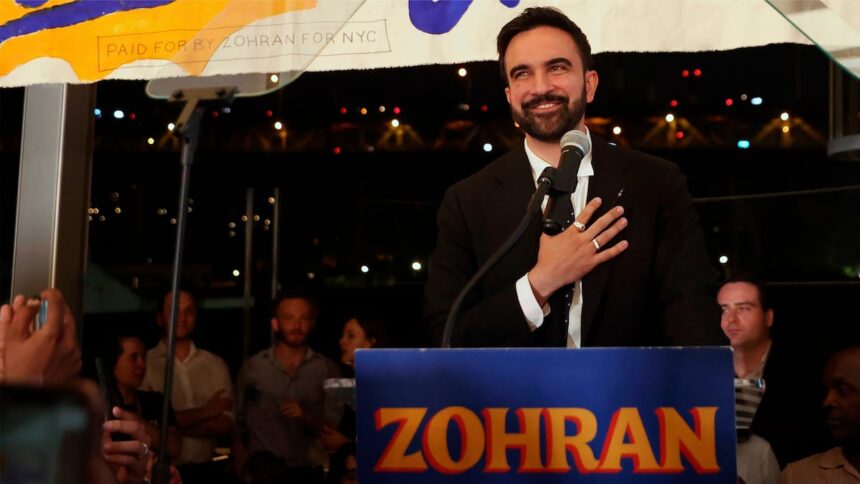
Zohran Mamdani, a 34 year old Democratic frontrunner, is on the brink of becoming New York City’s youngest mayor in over a century and the first Muslim and South Asian to lead America’s largest city.
While campaigning on the Upper East Side, Mamdani could barely walk a few steps without being stopped by supporters seeking selfies. His growing popularity, particularly among young voters, has transformed him from a relatively unknown housing counsellor and hip-hop artist into a leading political figure commanding national attention.
A Progressive Rise
Through viral social media campaigns and podcasts, Mamdani has attracted disillusioned voters seeking change within a party struggling with internal trust issues. His campaign mirrors the politics of Bernie Sanders and Alexandria Ocasio Cortez promising to tax millionaires, expand social programs, provide universal childcare, freeze rent in subsidized housing, and make public buses free.
But critics question whether a candidate with no executive experience can deliver such ambitious promises or handle a potential clash with a hostile Trump administration. Former Governor Andrew Cuomo, now running as an independent, calls Mamdani’s plans “anti-business,” while Republican nominee Curtis Sliwa mocks his lack of experience.
Policy and Public Sentiment
Mamdani’s campaign is laser-focused on affordability, with supporters praising his commitment to make New York livable again amid rising costs. He argues his $9 billion plan, funded through corporate and millionaire taxes, would ease the financial strain on working families. Governor Kathy Hochul, though opposed to higher taxes, backs his universal childcare initiative, calling it “a shared goal for a fairer city.”
As Mamdani rides city buses to promote his free transport plan, he insists that democracy must deliver material benefits: “To defend democracy, we must meet the real needs of working-class people right here in New York.”
Growing Acceptance in Business Circles
Initially met with panic from Wall Street and real estate leaders, Mamdani has since softened tensions through direct engagement. CEOs and entrepreneurs, including JPMorgan Chase’s Jamie Dimon, have expressed willingness to collaborate if he wins. Business figures still voice concern about his rent freeze and taxation plans but commend his universal childcare proposal.
Shifting Views and Challenges
Once a vocal supporter of police defunding, Mamdani has since apologized and pledged to maintain NYPD staffing levels, emphasizing community safety through mental health response teams. He also vows to keep Police Commissioner Jessica Tisch to assure New Yorkers he won’t be soft on crime.
Balancing Identity and Leadership
Mamdani’s outspoken stance on Palestinian rights has divided voters in a city with a large Jewish population. Despite backlash, he has sought dialogue and expressed empathy toward Jewish residents who felt unsafe during earlier campaign rhetoric. However, he has also faced a surge in Islamophobic attacks, including death threats, prompting him to publicly address the issue.
Party Divisions and National Impact
While Mamdani’s progressive momentum excites liberal voters, it unsettles moderates within the Democratic Party. Leaders like Chuck Schumer have withheld endorsements, fearing Republicans will use Mamdani’s socialism as political ammunition. Yet for many New Yorkers, his campaign represents a break from establishment politics.
A New Wave of Hope
At recent rallies, volunteers compared the energy of Mamdani’s campaign to Barack Obama’s 2008 movement. Supporters see it not only as a local election but a defining moment for the Democratic Party’s future.
As New Yorkers head to the polls Tuesday, Mamdani’s historic candidacy stands as a symbol of generational change a challenge to politics as usual and a promise to reshape the city’s future from the ground up.