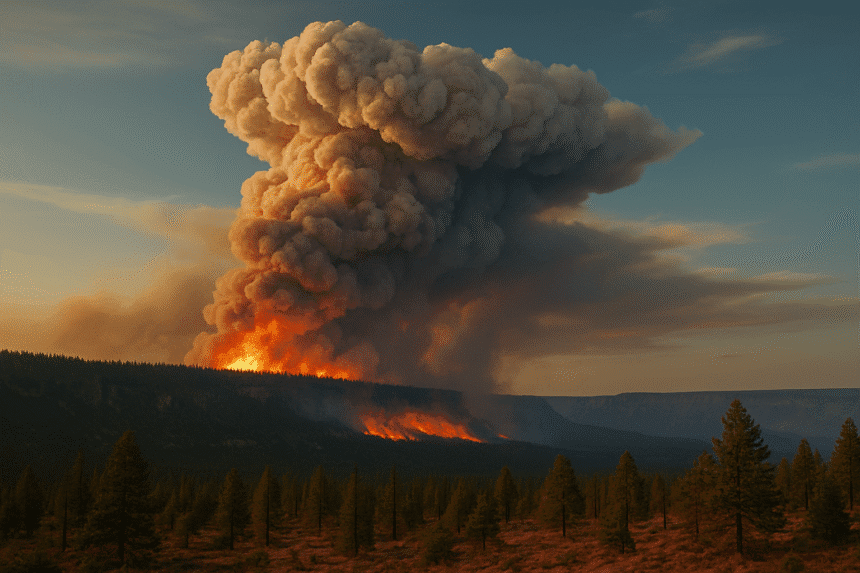
Two massive wildfires in Arizona and Utah have grown so intense that they are generating “fire clouds,” or pyrocumulus formations, creating their own unpredictable weather systems and complicating firefighting efforts.
In Arizona, the Dragon Bravo Fire on the North Rim of the Grand Canyon has scorched more than 164 square miles, making it the largest wildfire currently burning in the U.S. and among the top 10 biggest in Arizona’s history. Sparked by lightning on July 4, the fire has destroyed the Grand Canyon Lodge and historic cabins, forcing the closure of the North Rim for the season. It is only 9% contained.
Meanwhile, Utah’s Monroe Canyon Fire has spread across 75 square miles since July 13 and remains just 11% contained. Evacuation orders have been issued, and power outages have hit several towns after at least 12 utility poles were burned. Governor Spencer Cox has declared a state of emergency as firefighters continue to battle the blaze under extremely dry and windy conditions.
Fire officials report that towering pyrocumulus clouds some reaching 25,000 feet have fueled the flames with powerful winds. More dangerous pyrocumulonimbus clouds have even caused fire-driven thunderstorms, forcing crews to retreat for safety. NASA has described such formations as the “fire-breathing dragon of clouds.”
Residents in towns like Antimony, where the entire population lost electricity, are struggling with food storage and medical needs. Community volunteers have stepped in to provide hot meals and generator support as power companies rush to restore services.
Experts warn that such fire clouds may become increasingly common as climate change extends fire seasons and intensifies drought conditions across the West.