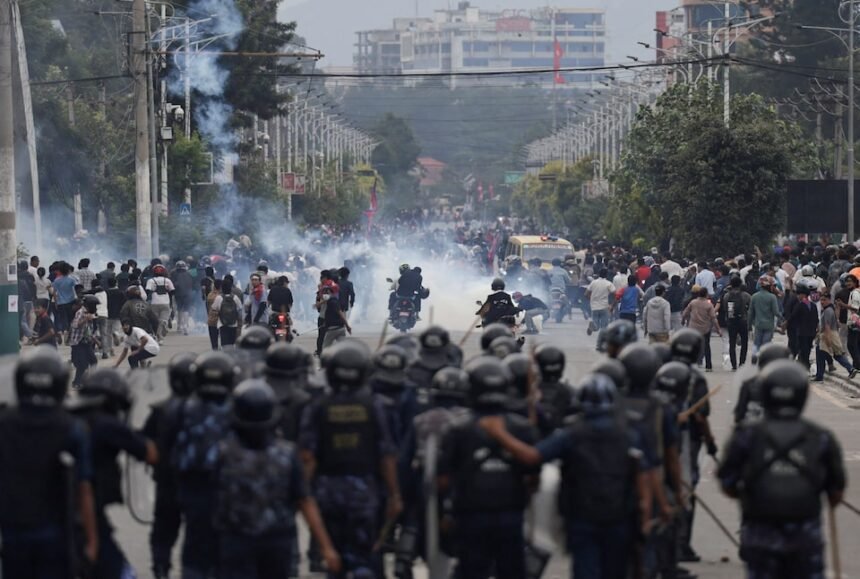
KATHMANDU: Nepal plunged deeper into turmoil on Wednesday as the death toll from nationwide anti corruption protests rose to 30, prompting the army to take control of security amid burning government buildings and a collapsed political order.
The unrest, driven largely by the country’s youth, erupted on Monday after anger over corruption, nepotism, and restrictions on social media boiled into the streets. The demonstrations turned violent when security forces opened fire, triggering riots that engulfed parliament, the Supreme Court, and the Singha Durbar administrative complex. Tribhuvan International Airport was also forced to shut temporarily.
By Tuesday night, flames had consumed schools, media houses, and even the Ministry of Health and Population, which included the National Health Emergency Operation Centre. Police stations were overrun, political leaders’ homes attacked, and mass jailbreaks reported, with several prisoners still at large. Hospitals remain overwhelmed with critically injured patients, while many people are missing.
UN Secretary General António Guterres expressed sorrow over the loss of life and urged Nepalese authorities to respect human rights and pursue dialogue. “Protests must remain peaceful, protecting life and property,” he said in a late-night social media post.
The volatile situation prompted the army to impose movement restrictions, set up checkpoints, and recover looted weapons. Youth groups have also stepped in, returning stolen firearms and even helping capture escapees. Tribhuvan International Airport has since reopened, and some police stations have resumed operations.
Amid the wreckage, discussions are underway about forming an interim government, dissolving parliament, and investigating illegal assets to restore public trust. In the capital, young volunteers were also seen clearing debris, reflecting both the destruction and resilience of a nation now standing at a crossroads.