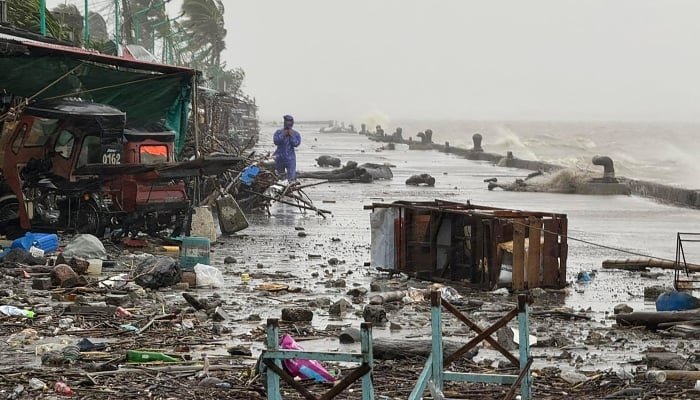
Authorities in southern China are preparing to evacuate nearly 400,000 residents from Shenzhen as Super Typhoon Ragasa barrels across the region after making landfall in the northern Philippines on Monday.
The storm slammed into Calayan Island in the Babuyan archipelago at 3 pm (0700 GMT), bringing maximum sustained winds of 215 kilometres per hour and gusts reaching 295 kph, according to the Philippine weather bureau.
In the northern province of Cagayan, residents described the violent winds rattling their homes. “It sounded like a machine had been switched on,” said Tirso Tugagao, a resident of the coastal town of Aparri. Cagayan’s disaster response chief Rueli Rapsing warned his teams were preparing for “the worst.”
More than 10,000 Filipinos were evacuated nationwide as schools and government offices shut down across 30 provinces, including the capital Manila.
Meanwhile, Chinese authorities launched a far larger operation. In Shenzhen, hundreds of thousands are set to be moved from low-lying and coastal districts. Several other cities in Guangdong province suspended classes, halted public transport, and urged residents to remain indoors.
Air travel has also been hit hard. Cathay Pacific announced it would cancel over 500 flights, suspending all passenger services in and out of Hong Kong International Airport from Tuesday evening until Thursday daytime.
Torrential rains expected in Taiwan
Taiwan’s weather bureau warned of “extremely torrential rain” in the east, with Ragasa’s massive 320-kilometre storm radius already sweeping parts of the island. Evacuations are underway in mountainous southern areas, where officials fear damage could rival that of Typhoon Koinu in 2023.
Philippine officials also warned of severe flooding and landslides across northern Luzon. The risk of catastrophic floods comes amid public anger over a corruption scandal involving unfinished or substandard flood-control projects.
Growing climate concerns
The Philippines, struck by an average of 20 typhoons a year, remains one of the world’s most disaster-prone nations. Scientists caution that climate change is intensifying storms, making them stronger and more destructive.
As Ragasa churns toward southern China, millions across the region are bracing for what could be one of the strongest storms in recent years.