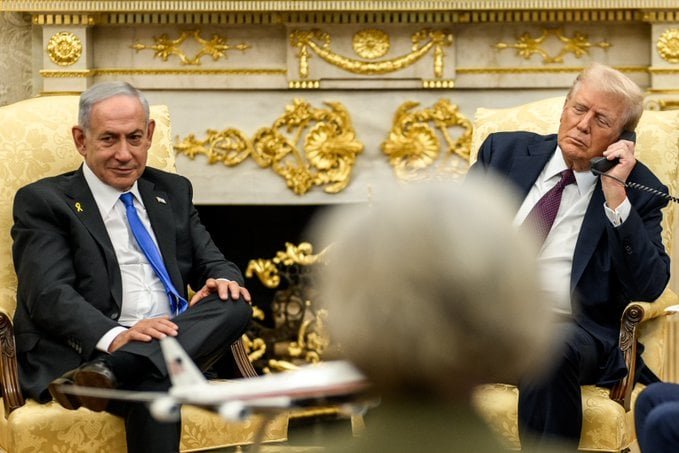
Israeli Prime Minister Benjamin Netanyahu apologised to Qatar’s emir on Monday for Israel’s missile strike in Doha earlier this month, which killed a Qatari serviceman and violated the Gulf nation’s sovereignty. The rare apology came during a phone call from the White House, where Netanyahu was meeting US President Donald Trump about a Gaza ceasefire plan.
According to a White House statement, Netanyahu expressed “deep regret” over the September 9 strike against Hamas targets in Qatar and pledged that Israel would not repeat such actions. He also agreed with Qatar’s Prime Minister Sheikh Mohammed bin Abdulrahman bin Jassim Al Thani to form a three-way committee with the US to improve communication and prevent future incidents.
The strike, carried out as Hamas leaders were considering a US ceasefire proposal in Gaza, sparked outrage in Doha, home to America’s largest airbase in the region and a key mediator with Hamas. Trump, who has cultivated close ties with Qatar, voiced his displeasure over Israel’s attack.
For weeks, Netanyahu had defended the strike, accusing Qatar of sheltering Hamas. But his tone shifted under US pressure, with Washington warning that such actions risked undermining delicate negotiations.
Meanwhile, the United Arab Emirates urged Netanyahu to accept Trump’s Gaza peace plan and abandon any annexation of the West Bank, warning that further normalization with Arab and Muslim countries including Saudi Arabia and Indonesia would collapse if Israel ignored the deal.
In Israel, families of hostages and protesters gathered outside the US embassy in Tel Aviv, chanting “Now, now” and urging Trump to push Netanyahu toward a breakthrough. In an open letter, the Hostages and Missing Families Forum pleaded with Trump to “make history” by finalizing the 21-point peace plan he presented to Arab leaders last week.
With pressure mounting from Washington, Arab states, and Israeli citizens alike, Netanyahu now faces one of the toughest choices of his premiership: continue defiance or embrace a deal that could reshape the region’s future.