Severe Drought: Tehran May Face Evacuation, Warns President Masoud Pezeshkian
Tehran, Iran – Iran’s President Masoud Pezeshkian has warned that the capital, Tehran, could face evacuation if rainfall does not arrive before the end of the year. The warning comes amid the worst drought in decades, with the city’s main water reservoirs dangerously low.
President Pezeshkian emphasized that if the drought continues, the government may be forced to restrict water supply and, in extreme cases, consider moving parts of the city’s population to prevent a humanitarian crisis.
This year, rainfall in Tehran has been the lowest recorded in a century. Many provinces in Iran have gone months without a single drop of rain.
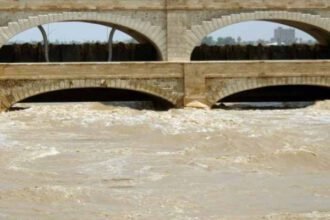
Tehran’s daily water consumption is around 3 million cubic meters, while key reservoirs, including the Amir Kabir Dam, are almost dry. The dam currently holds only 14 million cubic meters of water, barely enough for two weeks of supply.
Last year, during the same period, the dam contained 86 million cubic meters, highlighting the severity of the current shortage
Authorities have already begun limiting water supply in some areas during nighttime to conserve remaining resources.
Iran’s Energy Minister Abbas Ali Abadi stated that these measures are necessary to prevent further wastage, though they may cause some inconvenience to residents.
Past efforts, including public holidays during peak summer months, were also implemented to conserve water and electricity.
If water scarcity continues, essential services, public health, and daily life in Tehran could be severely disrupted.
An evacuation, if implemented, would pose significant logistical, social, and economic challenges for the city’s 9–10 million residents.
Experts warn that long-term planning and reforms in water management, agriculture, and urban infrastructure are critical to prevent future crises.
The drought in Iran is an ongoing emergency, and authorities are urging immediate conservation measures. While evacuation remains a last-resort scenario, officials emphasize that swift action is necessary to avoid a more severe humanitarian situation.