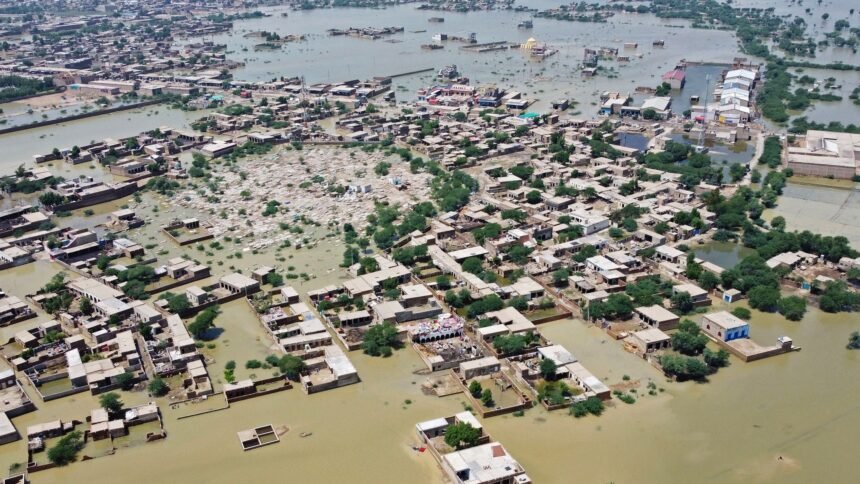
Pakistan: More than 120 people, including 63 children, have died across Pakistan in the past three weeks due to severe monsoon related disasters, as the country enters another deadly rainy season.
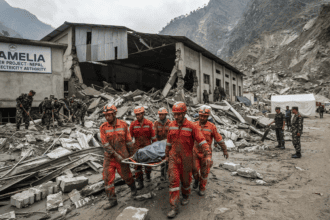
The National Disaster Management Authority (NDMA) confirmed that most deaths were caused by house collapses and flash floods, while drowning accounted for around 10% of fatalities.
Pakistan, with a population over 250 million, is among the most climate-vulnerable countries in the world. The situation worsens each year, with memories still fresh from the devastating 2022 floods, which killed 1,700 people, displaced over 30 million, and caused damages worth $30 billion.
The most recent casualties were reported in Punjab (49 deaths) and Khyber Pakhtunkhwa (38 deaths). Cities like Lahore suffered power outages, flooded streets, and urban chaos. In Swat, nine family members drowned while picnicking as the river suddenly overflowed.
The Pakistan Meteorological Department (PMD) has warned of more heavy rains and urban flooding in coming days.
An NDMA official said that while large-scale river floods like 2022 may not occur this year, flash floods and city level flooding are a major risk.
Pakistan gets nearly 80% of its rainfall during monsoon (June–September). But this year, the situation is worse due to extreme heat, especially in Gilgit-Baltistan, where temperatures soared above 48°C even in mountainous areas.
This region, often called the “third pole”, holds more than 13,000 glaciers. Due to excessive heat, glaciers are melting rapidly, increasing the danger of Glacial Lake Outburst Floods (GLOFs) sudden floods caused by bursting glacier lakes.
Experts warn this trend is alarming, citing history: during the “Little Ice Age”, both high heat and high precipitation led to severe floods.
Pakistan blames the global community for not offering enough help. Although the country contributes only 0.5% of global carbon emissions, its people are 15 times more likely to die from climate-related disasters.
After the 2022 floods, $10 billion was pledged at a UN-led donor conference, but only $2.8 billion has been received by 2024.
Still, many experts say Pakistan’s internal failures are worsening the crisis.
“This damage is the cost of inaction,” says climate expert Ali Tauqeer Sheikh.
Poor urban planning, illegal construction near rivers, and failure to implement climate reforms have made communities extremely vulnerable. More than 50% of Pakistan’s urban population now lives in slums or informal settlements.
The NDMA claims it is working on risk maps, early warnings, and evacuations, but real long-term solutions remain lacking.
Experts stress that climate change is only part of the problem. Pakistan must address its governance issues, enforce building codes, and invest in community-level preparedness.
“We keep asking for international help but ignore what we need to fix at home,” said Sheikh. “There hasn’t been a single major reform since 2022.”
Without real change, Pakistan remains dangerously exposed to deadly floods, extreme heat, and climate disasters year after year.