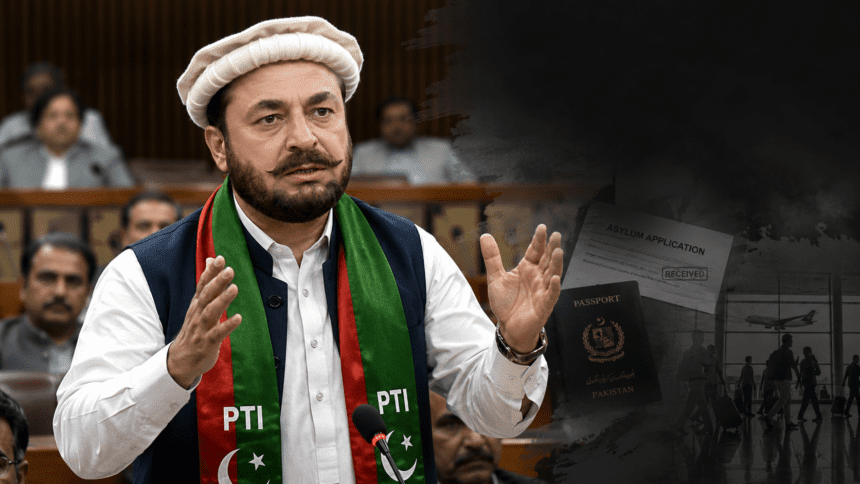
The Pakistan Tehreek-e-Insaf (PTI) has moved to shield MNA Iqbal Afridi after reports surfaced that his son has sought asylum abroad. Party leadership framed the move not as a personal flight, but as a direct consequence of state-sponsored intimidation.
Afridi’s son, whose departure has sparked intense scrutiny, reportedly filed for asylum citing political persecution. PTI officials argue this is the inevitable outcome of the government’s current crackdown on opposition families.
“When you target someone’s home, their livelihood, and their children, you leave them no choice,” a senior PTI spokesperson told reporters in Islamabad. The party maintains that the state’s aggressive legal and surveillance tactics have pushed many activists and their families toward the exit.
Critics of the PTI, however, point to the optics. For a party built on the rhetoric of national pride and “Naya Pakistan,” the sight of a prominent lawmaker’s family member seeking refuge in the West creates a difficult narrative. It fuels long-standing accusations from government ministers that PTI leaders preach sacrifice for the masses while securing their own exits.
The government has remained characteristically sharp in its rebuttal. Information ministry officials have dismissed the asylum claim as a “staged drama,” suggesting it is a calculated attempt to secure legal status abroad while maintaining political relevance at home. They argue there is no organized “oppression” justifying such claims, calling the narrative a fabrication designed to garner international sympathy.
This isn’t the first time the families of PTI lawmakers have found themselves in the crosshairs. Since the events of May 9, the party has seen a wave of defections and legal battles, with many members claiming their relatives have been harassed or detained to force political compliance.
The asylum move now forces a wider debate on the state of civil liberties. Whether this case represents a genuine human rights crisis or a convenient exit strategy remains the core of the dispute.
For the PTI, the incident serves as a rallying cry against what they term a “fascist regime.” For the government, it is a convenient piece of evidence to paint their opponents as disconnected from the country they claim to represent. As the political temperature rises, the specific case of the Afridi family has become the latest front in a broader, bitter struggle for control of the national narrative.