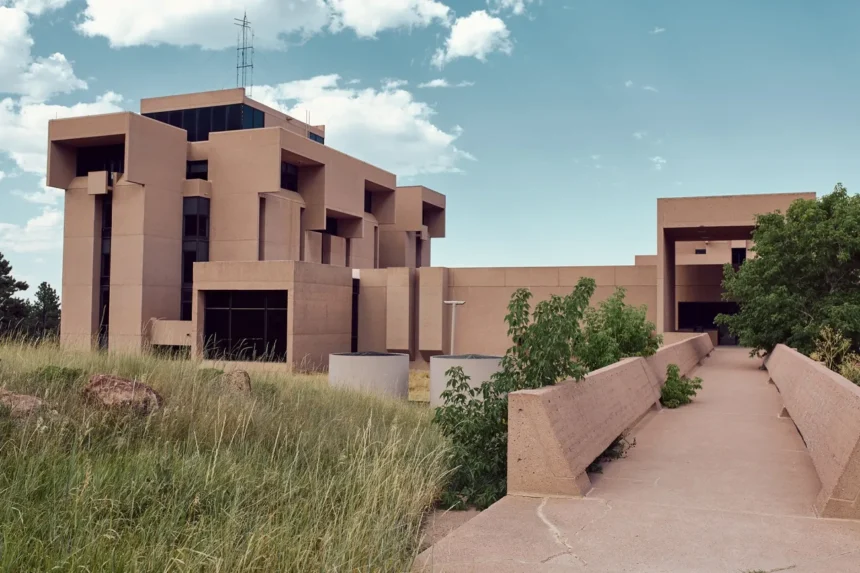
NEW ORLEANS: The Trump administration has moved to break up the National Center for Atmospheric Research (NCAR), one of the world’s leading climate and weather research institutions, triggering shock and concern across the scientific community.
The decision came to light after Russell Vought, Director of the White House Office of Management and Budget, posted on social media calling NCAR a major source of “climate alarmism.” He said the center’s key functions, including weather research, would be shifted to other locations or organizations. The announcement was made without prior notice to NCAR or its main funder, the National Science Foundation (NSF).
Soon after, NSF confirmed it would begin reshaping NCAR’s mission. The agency said future work would focus more narrowly on seasonal forecasting, severe weather, and space weather, while management of NCAR’s powerful supercomputer and research aircraft could be transferred elsewhere.
The news spread quickly at the American Geophysical Union’s annual meeting in New Orleans, where many scientists expressed fear that the move threatens scientific independence. Antonio Busalacchi, president of the University Corporation for Atmospheric Research, which manages NCAR, warned that the step reflects a broader effort to restrict free scientific inquiry. He said such actions should worry every American.
Experts also cautioned that dismantling NCAR could weaken U.S. leadership in climate and weather science. Roger Pielke Jr., a former NCAR scientist and current fellow at the American Enterprise Institute, said criticism of climate science institutions is fair, but destroying them is not. He described the move as a damaging overreaction that risks harming public services that millions rely on.
Founded in 1960, NCAR has played a central role in developing modern weather and climate models. Its 830 staff members work on forecasting storms, studying air pollution, and improving climate prediction tools used by governments and emergency agencies worldwide. While the center faced limited layoffs earlier this year and complied with White House directives by closing certain diversity focused programs, it had largely avoided deep budget cuts until now.
Some analysts believe the administration’s move is politically driven. Pielke noted that much of NCAR’s work is not directly related to climate change, suggesting the attack reflects broader hostility toward climate science. This week, the administration also canceled $109 million in green transportation grants for Colorado, further fueling speculation of political motives.
Colorado’s Democratic lawmakers strongly condemned the decision. In a joint statement, Senators Michael Bennet and John Hickenlooper, along with Representative Joe Neguse, called the move dangerous and retaliatory, vowing to resist any attempt to weaken the institution.
What happens next remains uncertain. NCAR leadership has signaled openness to talks with the White House, while others argue that Congress which has historically supported NCAR across party lines may be the best hope for protecting the center.
Community advocates warn the impact could extend beyond scientists. Abre’ Conner of the NAACP said NCAR has been a crucial source of information for communities facing extreme weather and climate related disasters. Without it, many may struggle to get reliable answers.
Outside the conference center in New Orleans, atmospheric scientist Travis O’Brien held a handmade sign reading, “Closing NCAR will harm the American public.” His message echoed a growing fear among researchers: that weakening NCAR could leave the nation less prepared for storms, floods, and other weather emergencies that affect everyday lives.