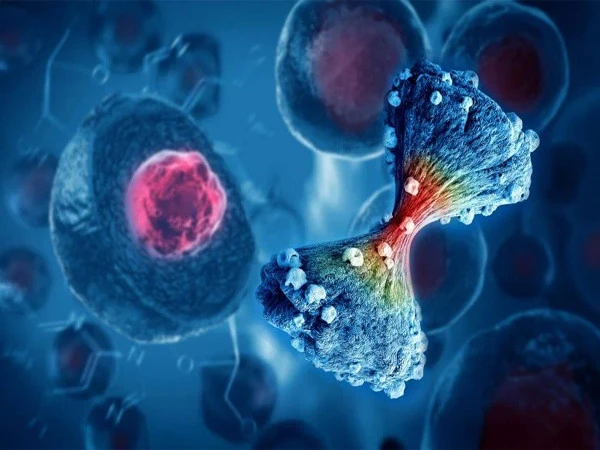
Scientists have developed a new artificial intelligence system that can predict the likelihood of cancer spreading to other parts of the body.
This AI system, named Mangrove GS, analyzes patterns of complex gene activity to estimate the chances that a tumor may spread to other parts of the body.
The research has been published in the scientific journal Cell Reports and may help doctors in the future estimate the risk of metastasis, meaning the spread of cancer, in their patients.
One of the biggest scientific mysteries about cancer has been why some tumors do not spread while others rapidly reach other parts of the body. Particularly in colon, breast and lung cancers, when the disease spreads the risk of death increases significantly.
According to Professor Ariel Ruiz i Altaba, professor of genetic medicine and development at the University of Geneva, it is not correct to understand cancer only as uncontrolled cell growth. In fact, it can be viewed as a set of biological programs that are usually active during the early development of the body but later become active again at the wrong time or in the wrong place.
To understand this process, researchers used cloned cells obtained from colon tumors. They analyzed the activity of hundreds of genes to determine how different cells respond.
During the research, scientists identified certain gene activities that were strongly linked with the ability of cells to spread cancer.
Based on this information, researchers developed Mangrove gene signatures, an AI based system that analyzes dozens or even hundreds of genetic signatures simultaneously to estimate the likelihood of cancer spreading.