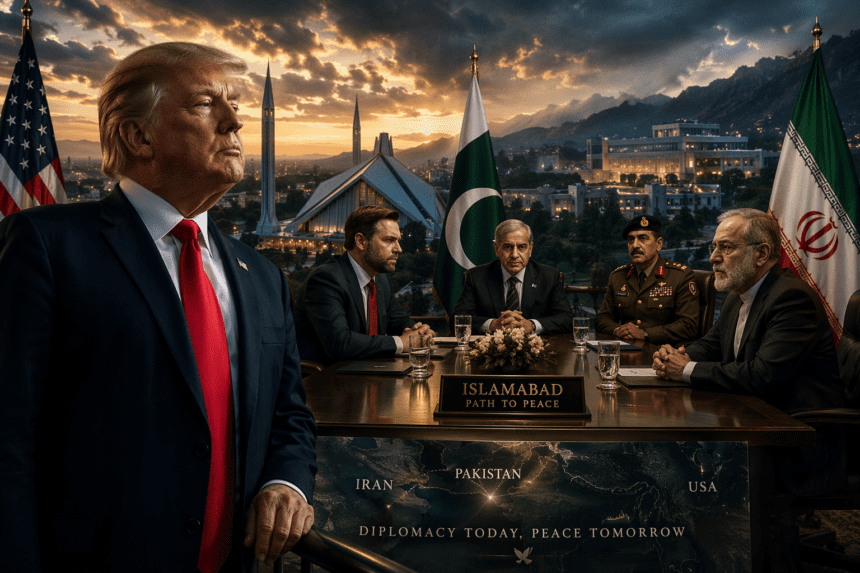
U.S. President Donald Trump said on Thursday that he could travel to Islamabad if a peace deal with Iran is finalized and signed in the Pakistani capital, a remark that instantly raised the stakes around Pakistan’s role in one of the most delicate diplomatic efforts now underway in the region. Trump said a new round of talks with Iran could happen “maybe, probably over the weekend” and suggested Islamabad remains the likeliest venue if negotiations move forward.
The comment lands at a moment when diplomacy feels alive again, but only just. Pakistan said on April 16 that a second round of U.S.-Iran talks has been agreed to in principle, though no date has been fixed. Islamabad has kept channels open with both Washington and Tehran, and its Foreign Ministry says it is still acting as a facilitator rather than a formal guarantor of any eventual accord.
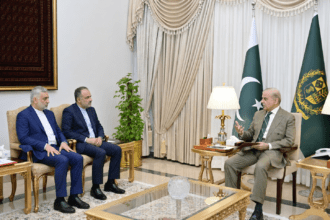
That matters because the first round of talks in Islamabad, held on April 11 and 12, ended without a breakthrough after roughly 21 hours of negotiations. The U.S. side was led by Vice President JD Vance, while Iran’s delegation was headed by Parliament Speaker Mohammad Bagher Ghalibaf. Pakistani officials hosted and mediated, with Prime Minister Shehbaz Sharif, Deputy Prime Minister Ishaq Dar and Army Chief Field Marshal Asim Munir all involved at different stages of the process.
Vance emerged from that session with a blunt message: no agreement had been reached. He said Washington wanted a firm, long-term Iranian commitment not to seek a nuclear weapon or the capability to build one quickly. Iran, for its part, signaled that sanctions relief, frozen assets and the wider regional security picture were all tied up in the same knot. That is usually how these things go in the Middle East: nothing stays in one box for long.
The unresolved agenda is not small. Nuclear issues remain central, Pakistani officials confirmed this week, but they are not the only ones. The future of sanctions, access to blocked Iranian funds, the durability of the ceasefire, and the fallout from fighting linked to Lebanon have all fed into the negotiating atmosphere. Pakistani officials have tried to project calm, insisting the first round represented “neither a breakthrough nor a breakdown,” which is a careful diplomatic way of saying the door is still open.
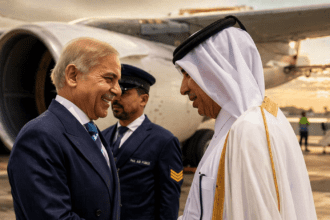
Behind the scenes, Pakistan appears determined not to let the process collapse after one exhausting weekend. Shehbaz Sharif has been traveling through key regional capitals, while Asim Munir visited Tehran as part of the effort to keep momentum from slipping away. In its briefing on Thursday, Pakistan’s Foreign Ministry described these moves as part of a continuing peace push and said Islamabad remained optimistic that an understanding between the United States and Iran was still reachable.
Washington, too, has been careful not to shut expectations down. White House Press Secretary Karoline Leavitt said this week that discussions about another round were “productive and ongoing,” adding that Pakistan had emerged as the “only mediator” in the current effort. She also stressed that nothing was official yet, a reminder that there is still a lot of daylight between hopeful language and an actual signed text.
Trump’s suggestion that he might personally come to Islamabad if a deal is ready gives the story a different political weight. Presidents do not casually float travel to a negotiation site unless they want to signal urgency, confidence, or both. It also hands Pakistan a moment of unusual diplomatic visibility, with Islamabad now trying to turn mediation into something more lasting than a one-off hosting role.
Still, nobody serious is pretending the hard part is over. The first talks showed how far apart the two sides remain on core security guarantees, and the regional backdrop is still volatile. Even so, the fact that both sides are discussing another meeting — and that Trump is openly talking about showing up if an agreement is ready — is the clearest sign yet that the Islamabad channel has not failed. Not yet, anyway.