Iran said on Saturday that major disputes with the United States remain unresolved, even as negotiations continue over a wider de-escalation deal tied to the war and the future of the Strait of Hormuz, one of the world’s most critical energy chokepoints. Iranian officials say sanctions relief, security guarantees and the fate of Tehran’s enriched uranium stockpile are still sticking points, while shipping through the strait remains heavily restricted.
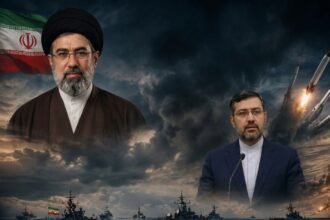
The latest comments came from senior Iranian officials who argued that Washington’s demands are still too broad to form the basis of a final agreement. Iran has rejected calls to surrender its enriched uranium and has also signalled it will not move quickly into direct face-to-face talks while sanctions and military pressure remain in place.
At the centre of the crisis is the Strait of Hormuz, the narrow waterway linking the Gulf to the Gulf of Oman. In normal times, roughly one-fifth of the world’s oil and liquefied natural gas supplies move through the passage, which is why even partial disruption there sends shockwaves through energy markets and shipping routes far beyond the Middle East.
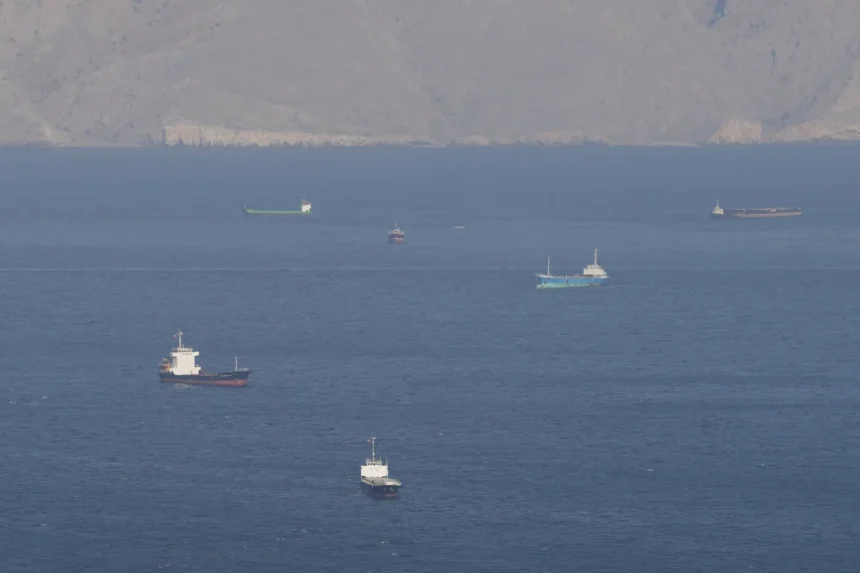
Despite a fragile ceasefire announced earlier this month, vessel traffic has not returned to normal. Reporting over the past week has shown that only a small number of ships have been able to pass, while hundreds of vessels remain stranded in or near the Gulf. Analysts quoted by regional media said shipowners are still wary of using the route because of uncertainty, security threats and Iran’s continued control over access.
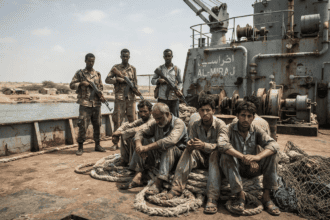
That uncertainty has only deepened after fresh incidents at sea. The Associated Press reported renewed violence involving India-flagged ships, while Iranian authorities continued to use the strait as leverage in talks linked to the broader conflict and U.S. pressure campaign. Iran’s position, at least for now, appears to be that the waterway will not fully return to open commercial traffic unless there is meaningful progress on the political track.
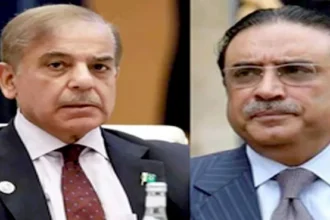
Negotiations, meanwhile, are still moving — just not smoothly. Pakistan has been involved in mediation efforts, and new proposals are reportedly under discussion, but both sides remain dug in. Tehran says it wants peace, though Iranian leaders have publicly emphasised their distrust of Washington. The U.S., for its part, has kept sanctions pressure in place and tied any broader relief to a more comprehensive deal.
The economic stakes are enormous. Even a limited closure or controlled passage regime in Hormuz affects crude exports, insurance rates, freight costs and fuel prices, especially for Asian economies that depend heavily on Gulf energy supplies. Al Jazeera reported that before the conflict the strait typically handled around 120 to 140 daily transits, a figure that has fallen sharply during the crisis.
For now, the message from Tehran is pretty blunt: there is no final deal yet, and no quick reset in Hormuz either. Unless negotiators narrow the gaps on sanctions, nuclear issues and maritime access, the shutdown — whether formal or de facto — looks set to remain one of the most dangerous pressure points in the region.