California’s petroleum market is tightening sharply as prolonged disruption in the Strait of Hormuz ripples across global supply chains, leaving the state with unusually thin fuel inventories and fresh concern over prices. State data show California closely tracks refinery stocks through its Weekly Fuels Watch, while federal and state officials have both warned that the Hormuz crisis is constraining supply and raising costs across fuel markets.
The pressure is especially intense in California because the state is more exposed than most of the U.S. to imported crude and refined products. Reporting in recent days says California gasoline inventories have dropped to record lows, even before the full impact of disrupted Middle East-linked trade flows is felt. Separate coverage has also noted that California depends heavily on imported crude, with additional exposure through fuel shipments from Asian refiners that themselves rely on Gulf oil flows.
The broader backdrop is the still-fragile situation in Hormuz. The U.S. Energy Information Administration said in its April outlook that flows through the Strait of Hormuz remain limited, forcing production shut-ins across major Gulf exporters and lifting crude prices. EIA estimated collective shut-ins from Iraq, Saudi Arabia, Kuwait, the UAE, Qatar, and Bahrain rose from 7.5 million barrels a day in March to 9.1 million barrels a day in April under its disruption scenario.
For California, that global squeeze hits a market that already has little slack. The California Energy Commission has been monitoring refinery production and stocks weekly, while the state’s petroleum watchdog said last month that the Hormuz conflict was already driving higher fuel prices and described the disruption as a major global supply shock. The same state notice said officials were watching for opportunistic pricing as consumers absorbed the impact.
Another reason traders are nervous: California’s refining system is getting smaller, not bigger. State refinery data note that Valero’s Benicia refinery intends to cease refining operations by the end of April 2026, adding to worries about how much buffer the system really has if imports stay tight. In a market like California’s, even a modest supply loss can have an outsized effect because fuel specifications are unique and replacement barrels are harder to source quickly.
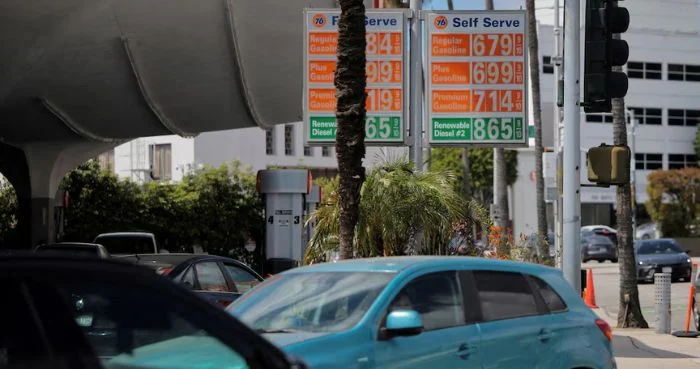
The likely consequence is continued volatility in pump prices and wholesale fuel costs, even if conditions in Hormuz improve intermittently. EIA’s April forecast said retail gasoline prices were expected to peak near a monthly average of $4.30 a gallon nationally in April, with the agency stressing that the path for prices depends heavily on how long the Middle East disruption lasts. California, which already runs above the national average, is widely seen as one of the most vulnerable markets in the country.
For now, the story is less about one dramatic shortage than a market losing its cushion. Inventories are thin, imports are vulnerable, and California’s fuel system is being squeezed from both directions: global disruption abroad and limited flexibility at home. If the Strait of Hormuz remains only partially functional, that pressure is unlikely to ease soon.