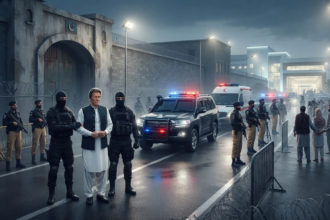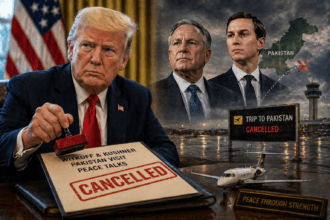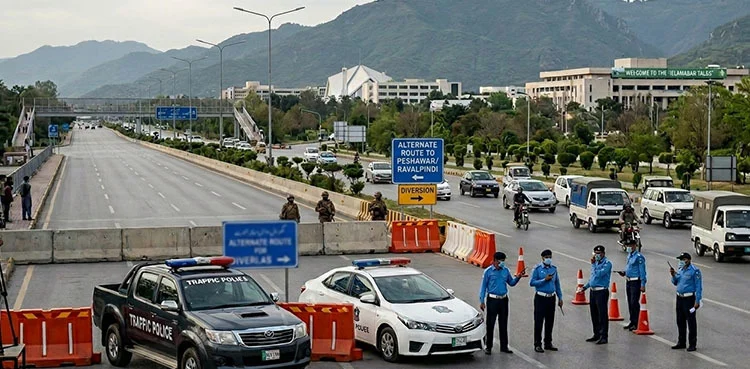
Security has been stepped up across Islamabad and nearby Rawalpindi as Pakistani authorities prepare for what local media and diplomatic sources describe as a possible second round of U.S.-Iran talks, though an official confirmation from Washington or Tehran still appears to be missing. Reports published on April 18 and April 19 said police deployments had been increased, checkpoints expanded and access around sensitive sites tightened ahead of a potential return of the two delegations to the Pakistani capital.
According to local reporting, more than 10,000 police personnel have been deployed and over 600 checkpoints set up in Rawalpindi, while some areas near Nur Khan Airbase and Islamabad International Airport are due to be sealed. The latest measures echo the heavy lockdown Islamabad saw during the first round of talks earlier this month, when major roads were blocked and movement around the Red Zone was tightly controlled.
The fresh precautions come after the first Islamabad talks on April 11–12 ended without a final agreement. That earlier round was aimed at preserving a ceasefire and trying to narrow disputes over sanctions, Iran’s nuclear program and the Strait of Hormuz, but the two sides left with core issues unresolved.
Since then, Pakistan has continued back-channel diplomacy in an effort to bring both sides together again. Several reports this week said Islamabad was being considered for another round, with Pakistani officials working on timing and logistics, but at least one report also noted there had been no formal confirmation from either the United States or Iran.
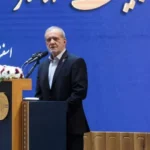
That uncertainty matters, because the diplomatic atmosphere is still pretty tense. Iranian Deputy Foreign Minister Saeed Khatibzadeh said on April 19 that Tehran is not ready for face-to-face talks while what he called Washington’s “maximalist” demands remain on the table, especially over sanctions and Iran’s enriched uranium. In other words, even if delegations do return to Islamabad, expectations for a quick breakthrough remain low.
For Pakistan, the talks are both a diplomatic opening and a major security test. Islamabad hosted the first round under extraordinary protection, and the same pattern now seems to be returning: visible police presence, road restrictions and heightened alert around government and transport hubs. The city is effectively being put back into negotiation mode, even as the second round remains described in most reporting as likely or expected rather than fully locked in.
The bigger backdrop is the still-unresolved crisis over the Strait of Hormuz and the wider U.S.-Iran confrontation. With maritime tensions high and diplomatic channels fragile, any new meeting in Islamabad would be watched closely as one of the few remaining paths to de-escalation. For now, though, the clearest development is on the ground in Pakistan: security is tightening first, while political certainty is lagging behind.