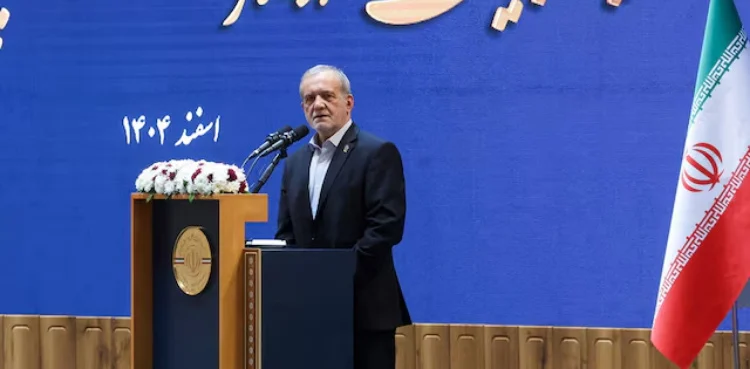
Iranian President Masoud Pezeshkian has renewed Tehran’s defense of what it calls its peaceful nuclear rights, as negotiations with the United States remain stuck over sanctions, uranium stockpiles and the future shape of any broader deal. Iranian officials say the country is open to diplomacy, but not on terms that require it to surrender what it considers non-negotiable national rights.
The latest push from Tehran comes at a tense moment. Speaking through official channels in recent days, Pezeshkian has paired calls for regional stability with warnings that pressure tactics will not force Iran into concessions on core issues. His government’s line is pretty clear now: Iran says it is not seeking nuclear weapons, but it also will not accept demands that strip it of civilian nuclear capabilities or force enriched material out of the country under U.S. terms.
That position was reinforced Saturday by Deputy Foreign Minister Saeed Khatibzadeh, who told The Associated Press that Iran is not ready for a new round of face-to-face talks with Washington because the Americans have not dropped what he described as “maximalist” demands. He also said transferring Iran’s enriched uranium to the United States is a “non-starter,” underlining just how wide the gap remains between the two sides.
The nuclear dispute has become one of the central obstacles in efforts to lower wider regional tensions. According to the U.N.’s nuclear watchdog, any future agreement would need a highly detailed verification regime to monitor Iran’s activities. International Atomic Energy Agency chief Rafael Grossi said this week that a deal without that kind of oversight would amount to little more than an illusion, a reminder that even if the politics shift, the technical hurdles are still huge.
Iran, meanwhile, continues to insist that its program is for peaceful purposes. Pezeshkian has repeatedly said Tehran wants security and stability, not war, while Iranian state and presidential outlets have framed the country’s nuclear program as a lawful right rather than a military project. That framing is central to Tehran’s public message at home and abroad, especially as pressure builds over enrichment levels and postwar inspections.
The timing matters. The argument over Iran’s nuclear rights is unfolding alongside fragile diplomacy over the Strait of Hormuz and the broader U.S.-Iran confrontation. With indirect contacts still alive but no breakthrough in sight, Tehran appears to be drawing a hard line before any new serious round of talks begins. In practical terms, that means the path to an agreement still looks narrow: Iran wants recognition of its nuclear rights and sanctions relief, while the U.S. and international monitors want tighter restrictions and far more intrusive verification.
For now, Pezeshkian’s message is less about compromise than about red lines. Iran says it can negotiate details, but not its basic claim to peaceful nuclear technology. That stance may play well domestically, but it also makes the next phase of diplomacy much harder, because the very issues Tehran treats as sovereign rights are the same ones Washington and the IAEA see as the heart of the problem.