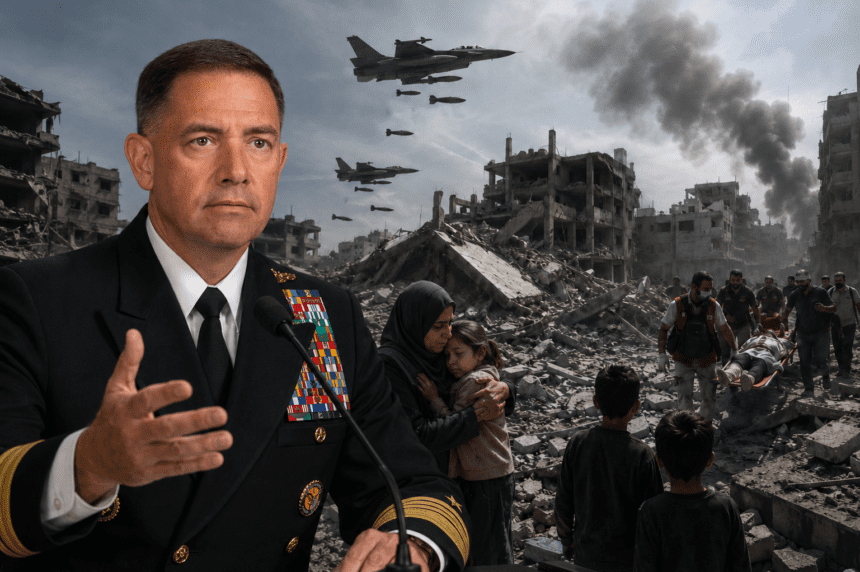
A senior U.S. military commander has dismissed reports alleging that recent American-linked strikes in Iran caused significant civilian casualties, adding fresh controversy to an already tense geopolitical situation.
During a Senate hearing, Admiral Brad Cooper, head of U.S. Central Command (CENTCOM), stated that there was “no corroborated evidence” indicating that U.S. forces deliberately targeted civilian infrastructure such as schools, hospitals, or residential areas in Iran.
His remarks have triggered renewed debate, as human rights organizations and independent media reports continue to suggest that civilian areas may have been affected during the escalation of military operations.
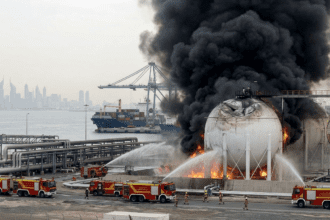
In recent weeks, multiple reports have alleged that strikes connected to the conflict resulted in damage to civilian infrastructure inside Iran. These claims include impacts on educational institutions, healthcare facilities, and residential neighborhoods.
Some investigations based on satellite imagery, eyewitness accounts, and open-source data have suggested that civilian structures may have been hit. However, these findings remain contested and have not been independently verified in full.
Iranian officials and relief organizations have accused foreign military operations of causing widespread damage and civilian suffering, while U.S. authorities maintain that their operations are strictly aimed at military targets.
During the hearing, several lawmakers questioned whether the Pentagon was adequately investigating allegations of civilian harm and whether assessments were transparent enough.
Admiral Cooper defended the military’s position, stating that many of the circulating reports were unconfirmed and still under review. He reiterated that U.S. and allied operations are designed to minimize civilian casualties and focus on military objectives.
He also noted that Iran’s military capabilities, particularly its missile systems and naval strength, have been significantly degraded during the ongoing conflict.
The controversy has drawn attention from human rights groups, which are calling for independent and transparent investigations into all reported civilian casualties.
Analysts warn that dismissing or failing to verify such claims could undermine international trust and further escalate tensions in the Middle East.
Meanwhile, supporters of U.S. policy argue that Iran’s regional activities justify defensive military action aimed at protecting strategic interests.
Beyond the battlefield, the situation highlights the growing role of information warfare, where competing narratives shape global perceptions of the conflict.
With limited independent access to war zones, verifying casualty figures and damage reports remains difficult. As a result, conflicting accounts from governments, media, and advocacy groups continue to circulate.
For now, the issue remains highly disputed, with ongoing investigations and political debate likely to continue in the coming weeks.