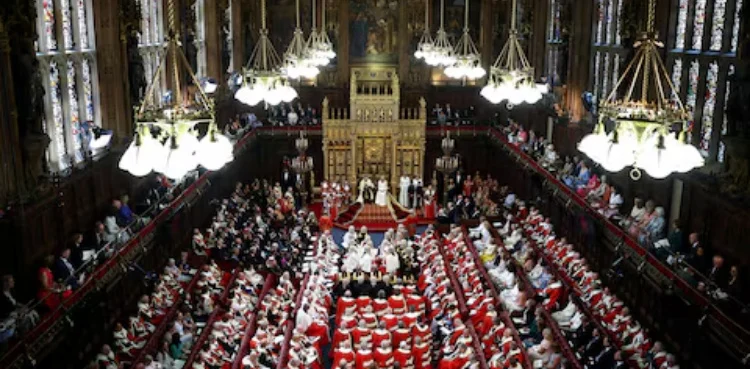
A group of 75 UK MPs has backed an Early Day Motion calling on the British government to impose sweeping sanctions on Israel, in one of the clearest parliamentary pushes yet for a tougher response to Israel’s conduct in the occupied Palestinian territories. The motion, EDM 2822, was tabled on 23 February 2026 and, as listed on the UK Parliament site, has 75 signatures.
What the motion says
The motion is titled “Government response to Israel’s West Bank annexation plan”. It condemns Israel’s 15 February approval of a plan to register land in the occupied West Bank as Israeli state property, describing it as de facto annexation and a violation of international law. It also points to the July 2024 advisory opinion of the International Court of Justice, which said Israel’s continued presence in the occupied Palestinian territory is unlawful and should end as rapidly as possible.
The language of the motion is striking. MPs behind it say the UK has failed to respond to Israel’s “reported war crimes and repeated international law violations” with the same seriousness it showed in sanctioning Russia over Ukraine. That wording matters: the motion is making a political and legal argument while framing the allegation as “reported war crimes” rather than presenting it as an established court judgement in this text.
What sanctions are being demanded
The motion calls on the government to take several concrete steps. These include banning trade and investment involving illegal Israeli settlements, imposing targeted sanctions such as travel bans and asset freezes on individuals and entities seen as complicit in the occupation, suspending the UK-Israel trade agreement until Israel complies with international law, and placing an arms embargo on Israel.
That is a far broader package than symbolic parliamentary criticism. It amounts to a demand for economic, diplomatic, and military pressure, all tied to the claim that Britain has legal obligations not to assist an unlawful situation identified by the ICJ.
Why this is politically important
Early day motions rarely force immediate government action on their own, but they do signal political momentum. In this case, the fact that 75 MPs signed on shows there is a sizeable bloc in Parliament willing to publicly support sanctions-based pressure on Israel. The signatories come from multiple parties, which adds weight even if the motion itself is not binding.
It also lands in a political environment where the UK has already taken some punitive steps against Israel before. In May 2025, Britain announced further sanctions and suspended trade negotiations with Israel over the Gaza crisis, showing that sanctions are no longer a fringe demand in British politics, even if the government has stopped well short of the full measures now being sought in EDM 2822.
The larger argument behind the motion
At the heart of this debate is a question that has been building for months: if the UK says international law must be upheld consistently, can it justify one standard for Russia and another for Israel? Supporters of the motion plainly think the answer is no. They argue that if the ICJ has already laid out obligations for states not to aid or assist an unlawful occupation, then Britain cannot continue business as usual.
Critics, of course, would say sanctions risk escalating diplomatic tensions and reducing Britain’s leverage. But the MPs backing this motion seem to be making a different calculation. Their view appears to be that diplomacy without consequences has achieved very little and that stronger pressure is now both a moral and legal necessity. This is an inference from the remedies they demand in the motion.
What happens next
The motion does not automatically change UK policy. The government is under no obligation to implement its demands simply because MPs signed it. But politically, it adds to mounting pressure from lawmakers, activists, and legal voices who want Britain to move beyond statements of concern and toward material consequences.
For now, the significance of the story lies in the message itself: a notable group of MPs is no longer asking merely for criticism of Israel’s actions. They are asking for sanctions, trade restrictions, and an arms embargo. In Westminster terms, that is a serious escalation of pressure.