By using this site, you agree to the Privacy Policy and Terms of Use.
Accept
Media HydeMedia Hyde
  • Home
  • Politics
  • Education
  • Entertainment
  • Sports
  • Blogs
  • Business & Commerce
  • Others
    • Religious
    • Metropolitan
    • Climate and Weather
Font ResizerAa
Media HydeMedia Hyde
Font ResizerAa
  • Home
  • Politics
  • Education
  • Entertainment
  • Sports
  • Blogs
  • Business & Commerce
  • Others
    • Religious
    • Metropolitan
    • Climate and Weather
Follow US
© 2026 Media Hyde Network. All Rights Reserved.
Blog

Harvard-Smithsonian Study Reveals Super-Earths Are Far More Common and Diverse Than We Thought

Last updated: October 8, 2025 10:52 pm
Wajeeha Batool
Share
SHARE

8 October, 2025

Web desk

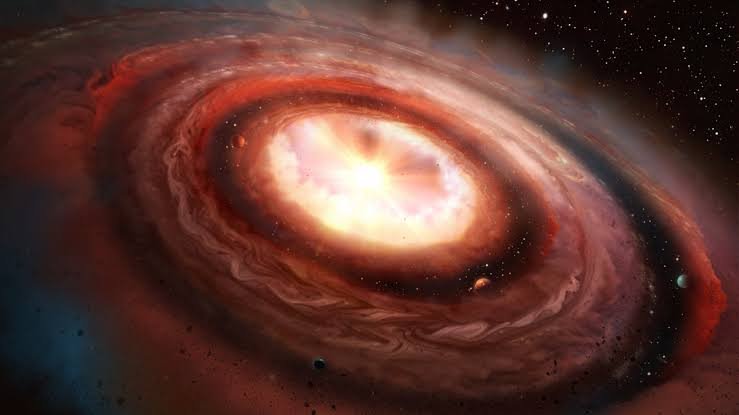
Imagine vast worlds bigger than Earth but smaller than Neptune orbiting stars all across our galaxy. For years, scientists believed such “super-Earths” were rare and mostly found scorching close to their stars. But a new study from the Harvard-Smithsonian Center for Astrophysics has turned that idea on its head. Using advanced gravitational microlensing techniques, astronomers discovered that these planets are actually everywhere—often orbiting much farther from their stars, at distances similar to where Jupiter or Saturn lie in our Solar System.

The research, based on data from the Korea Microlensing Telescope Network (KMTNet), reveals that super-Earths are not exotic at all they’re surprisingly common. In fact, the study suggests that roughly one in three stars in the Milky Way could host such a planet in a wide, cold orbit. That’s a huge shift from what scientists used to believe, and it means our Solar System might be more of an oddball than the norm. Many planetary systems could have mid-sized worlds in places where we’d expect gas giants, reshaping how we think planets form and evolve.

What makes this discovery even more exciting is its implications for the search for life. If super-Earths can exist farther out from their stars, that could expand the so-called “habitable zone,” the region where liquid water and potentially lifemight exist. Some of these planets might even have thick atmospheres, icy oceans, or underground environments capable of supporting life in ways we’ve never imagined. This finding opens a whole new window into the diversity of worlds that may exist beyond our reach.

Ultimately, this Harvard-Smithsonian study reminds us that our galaxy is far more complex and fascinating than we once believed. Super-Earths are no longer just scientific curiosities—they’re among the most common worlds in the Milky Way. And as technology improves, we may soon discover that our own planet isn’t as unique as we thought—it’s just one of countless variations scattered among the stars.


Share This Article
Email Copy Link Print
Previous Article Haripur Students Protest Govt Plan to Outsource Colleges
Next Article Could Fixing Your Sleep be the Secret to a Younger Brain?
Leave a Comment

Leave a Reply Cancel reply

Your email address will not be published. Required fields are marked *

Sponsored Ads

Stay Connected

FacebookLike
XFollow
InstagramFollow
YoutubeSubscribe
WhatsAppFollow
ThreadsFollow
Quantum Physicists Measure Time Without Traditional Clocks
Headline Space and Science
July 11, 2026
Pakistan’s livestock sector grows 89% in 18 years, data shows
Business & Commerce Headline
July 11, 2026
London Swelter: Residents Scramble for Outdoor Pools as Temperatures Climb
Climate and Weather Headline
July 11, 2026
LHC petitioned to strike down latest petroleum price hike
Economy Headline
July 11, 2026
PMD warns of GLOF risks as fresh weather system hits North
Climate and Weather Headline
July 11, 2026
OpenAI pulls the plug on Atlas AI browser after nine-month run
Headline Technology
July 11, 2026

You Might Also Like

Blog

Why Are Buildings Collapsing in Karachi? A Tragedy Repeating Itself

By
Hannan Kaimkhani
LIVER HEALTH ALERT — SIGNS YOU SHOULD NEVER IGNORE
BlogHealth

LIVER HEALTH ALERT — SIGNS YOU SHOULD NEVER IGNORE

By
Misbah Jogyat
BlogPolitics

China Tries to Keep Leverage With Trump and Iran as Conflict Keeps Shifting

By
Abdul Saboor
Blog

Researchers Study Keto Diet’s Impact on Depression

By
Irma Khan
Media Hyde Media Hyde Dark
Facebook Twitter Youtube Rss Medium

About US

Media Hyde Network: Your instant connection to breaking stories and live updates. Stay informed with our real-time coverage across politics, tech, entertainment, and more. Your reliable source for 24/7 News.

Top Categories
  • Headline
  • Politics
  • Entertainment
  • Education
  • Sports
  • Religious
  • Metropolitan
  • Climate and Weather
Usefull Links
  • Contact Us
  • Disclaimer
  • Privacy Policy
  • Cookies Policy
  • Advertising Policy
  • Terms & Conditions

© 2025 Media Hyde Network. All Rights Reserved.

Welcome Back!

Sign in to your account

Username or Email Address
Password

Lost your password?