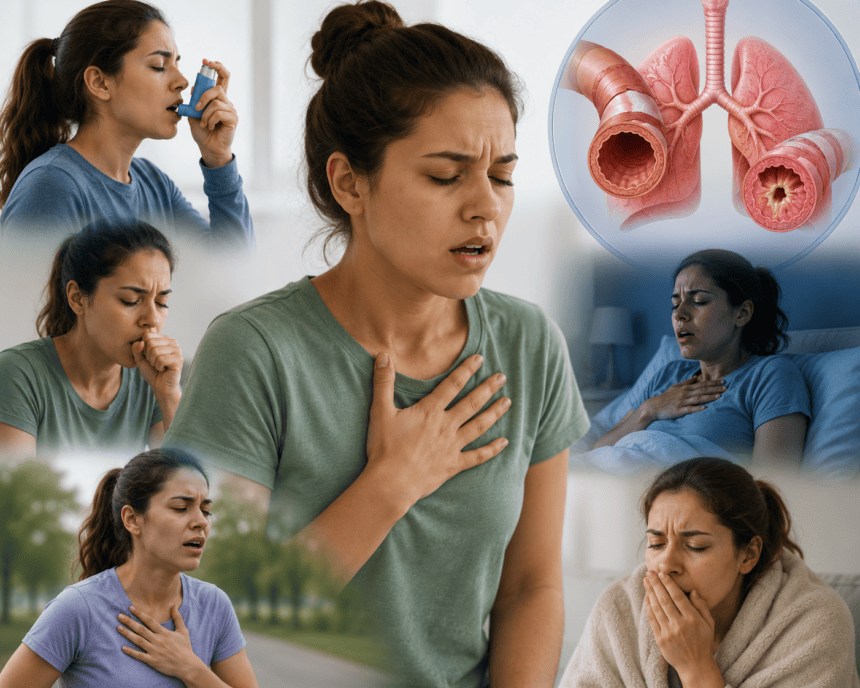
Asthma is a common long-term condition that affects the airways, causing them to become inflamed and sometimes narrowed. This can make it harder to breathe and may cause symptoms that come and go over time. Recognizing the warning signs can help people seek appropriate medical care and manage the condition more effectively.
Common Symptoms of Asthma
1. Wheezing
Wheezing is a high-pitched whistling sound that can occur when you breathe, particularly when breathing out. It is one of the symptoms commonly associated with asthma, although wheezing can also occur with other respiratory conditions.
2. Shortness of Breath
People with asthma may feel that they cannot get enough air or have difficulty breathing normally. This can occur during physical activity or at other times, depending on the person’s triggers and severity of asthma.
3. Chest Tightness
Some people describe asthma as a feeling of pressure, squeezing or tightness in the chest. This symptom can occur along with coughing or difficulty breathing.
4. Persistent or Recurrent Cough
A cough can sometimes be the main symptom of asthma. It may become more noticeable at night or early in the morning, and some people experience coughing after exercise or exposure to certain triggers.
Symptoms May Come and Go
Asthma symptoms are not necessarily present all the time. They can become worse after exposure to certain triggers, including:
- Dust and dust mites
- Pollen
- Pet allergens
- Smoke
- Air pollution
- Cold air
- Respiratory infections
- Exercise
- Strong odors or chemical fumes
Different people can have different triggers, and some may experience symptoms only in particular situations.
What Does an Asthma Attack Feel Like?
During an asthma flare-up, symptoms may suddenly become more intense. A person may experience severe coughing, wheezing, chest tightness and difficulty breathing.
A serious asthma attack can become an emergency. If someone is struggling to breathe, cannot speak normally because of breathlessness, or their symptoms are rapidly worsening, they should seek urgent medical attention. (cdc.gov)
How Is Asthma Diagnosed?
Having these symptoms does not automatically mean that someone has asthma. Doctors may consider a person’s symptoms, medical history and physical examination and may perform lung-function tests such as spirometry.
Because symptoms can overlap with other respiratory conditions, proper evaluation is important before starting treatment.
When Should You See a Doctor?
Consider speaking with a healthcare professional if you repeatedly experience:
- Unexplained wheezing
- Frequent coughing, especially at night
- Shortness of breath
- Recurrent chest tightness
- Breathing symptoms that interfere with sleep, exercise or daily activities
Early evaluation can help identify the cause and, if asthma is diagnosed, develop an appropriate treatment plan.
The Bottom Line
The four classic symptoms of asthma are wheezing, shortness of breath, chest tightness and coughing. Symptoms can vary from person to person and may be triggered by allergens, exercise, infections, smoke or other environmental factors.
Knowing these signs can help you recognize when breathing problems may need medical attention—but only a healthcare professional can determine whether the symptoms are caused by asthma.