Juices can provide vitamins, minerals and antioxidants, but they should not be considered a magic solution for weight loss. Whole fruits and vegetables are generally a better choice because they contain more fiber, which helps you feel full.
Here are eight nutritious juice options that can fit into a balanced weight-management plan.
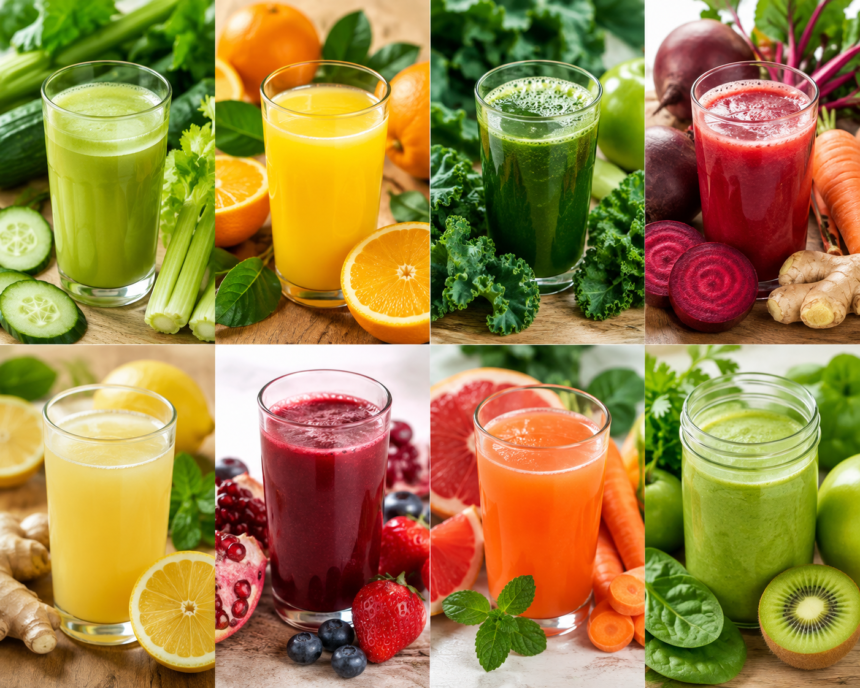
1. Celery Juice
Celery is naturally low in calories and contains a high amount of water. It also provides antioxidants and plant compounds. However, celery juice contains much less fiber than whole celery.
2. Beet Juice
Beet juice contains dietary nitrates, which may support blood-vessel function and exercise performance. Whole beets provide considerably more fiber than beet juice.
3. Pomegranate Juice
100% pomegranate juice contains antioxidants and polyphenols. It can be included in a healthy diet, but portion size matters because juice can still provide significant natural sugar.
4. Green Vegetable Juice
Juices made from vegetables such as spinach, kale, cucumber and celery can provide nutrients while keeping calories relatively low. Blending rather than straining the ingredients preserves more fiber.
5. Watermelon Juice
Watermelon has a high water content and provides vitamins A and C as well as potassium. Using whole watermelon in a smoothie can provide more fiber than traditional juicing.
6. Lemon-Ginger Green Juice
Lemon and ginger can add flavor and antioxidants to a vegetable-based drink. Adding leafy greens and blending the ingredients can make the drink more filling.
7. Carrot Juice
Carrots are rich in carotenoids and vitamin A. Blending whole carrots rather than extracting only their juice can help retain more fiber.
8. Kale-Apple Juice
Kale and apples provide a range of nutrients and plant compounds. For better satiety, blend the ingredients rather than removing the pulp.
A Better Way to Drink Juice
Avoid juices loaded with added sugar, syrups or artificial flavorings. Store-bought juices may contain more calories than expected. Whole fruits and vegetables should remain the main source of produce in your diet.
The Bottom Line: These juices can complement a healthy diet, but weight loss depends on your overall eating pattern, physical activity and calorie intake—not on one particular drink.