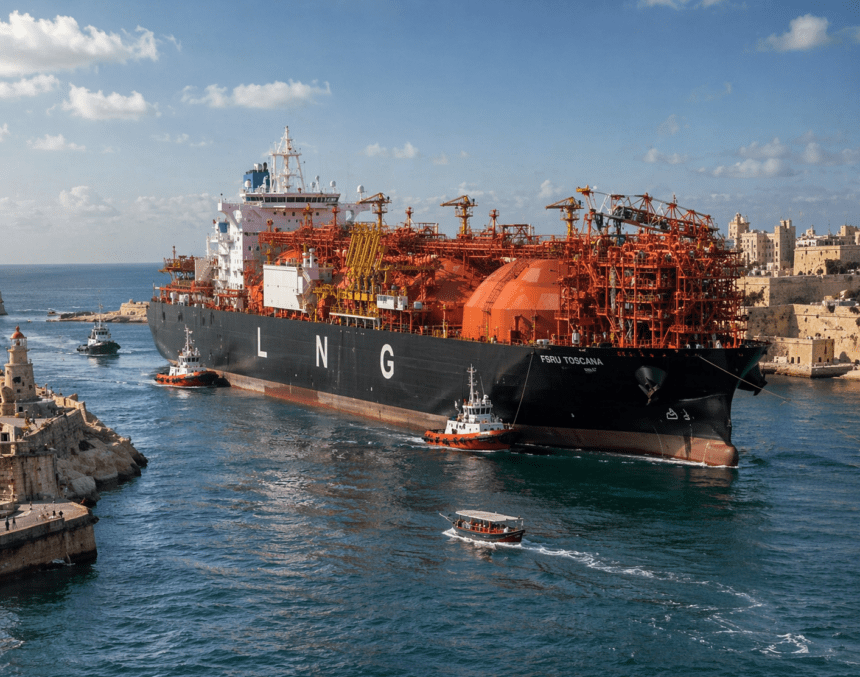
ISLAMABAD: Pakistan is in discussions with Qatar for additional or more reliable liquefied natural gas supplies as the country struggles with an electricity shortfall that has forced longer load management, emergency fuel switching and pressure on the national grid just as summer demand begins to climb. Recent reporting in Pakistan says officials have been grappling with disrupted LNG availability tied to wider Middle East tensions, while the power sector has warned that reduced gas availability could push up generation costs and worsen outages.
The immediate problem is simple, even if the politics around it are not. Pakistan relies on imported LNG, much of it from Qatar, to run efficient RLNG-based power plants during peak demand hours. A Senate committee briefing reported last month that LNG imports from Qatar had been severely disrupted, with officials warning supplies for the power sector could dry up after mid-April if flows did not normalize. That has now fed directly into the electricity system, where recent reporting says the country is dealing with a shortfall of around 3,400 megawatts and daily load management running well above earlier public commitments.
Inside the government, the response has turned urgent. Power-sector officials have argued for diverting more gas to electricity generation to avoid both steeper fuel costs and heavier outages. Dawn reported that without RLNG, about 5,000MW of efficient plants in Punjab become either redundant or far more expensive to operate on alternative fuels, while furnace oil and diesel generation carry a much higher per-unit cost. The government has already leaned more heavily on furnace oil, and maintenance scheduling in parts of the generation fleet has come under pressure as authorities try to keep more capacity online.
What makes this story more striking is how quickly Pakistan’s LNG position has flipped. Only months ago, Islamabad was talking to Doha for the opposite reason: too much contracted gas and too little demand. Pakistan had sought to divert or defer Qatari cargoes because domestic power consumption had weakened, solar adoption was rising, and the country was staring at an LNG surplus under long-term take-or-pay arrangements. Reports in late 2025 said Pakistan receives nine Qatari LNG cargoes a month under long-term deals and had asked Qatar to reroute some 2026 deliveries to international markets.
That earlier surplus has not disappeared from the background, but the regional security shock has changed the immediate calculation. Pakistan’s imported LNG is still heavily exposed to Gulf shipping routes, and several recent reports have linked the current squeeze to disrupted movement from Qatar and the wider Strait of Hormuz corridor. Analysts have also noted that while Pakistan’s rapid solar growth has reduced some pressure on imported fuels, LNG remains important for evening peaks and grid stability when solar output drops.
For consumers, the effect is already visible. Officials and local reporting say households and businesses are facing longer outages, especially during high-demand hours, while policymakers weigh the politically risky option of shifting scarce gas away from other users to keep the power system running. In practical terms, Pakistan’s talks with Qatar are not just about securing cargoes. They are about buying time for a grid that still depends on imported fuel at the worst possible moment.
The next few weeks will matter. If LNG flows stabilize, the government may be able to contain the damage with load management, fuel switching and tighter conservation. If they do not, Pakistan could face a tougher summer in which electricity stays scarce, generation gets more expensive and the country’s long-running energy vulnerabilities are exposed yet again.