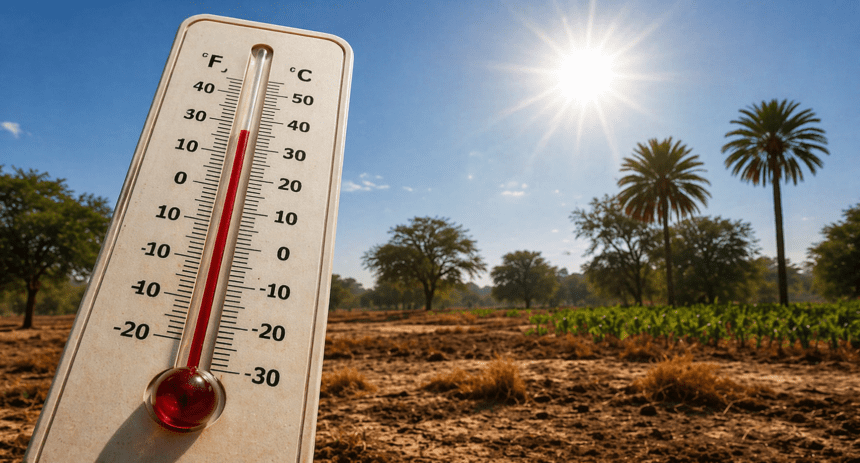
KARACHI: Weather officials in Pakistan are warning that a hotter stretch may be building for Karachi and much of the subcontinent, with the Pakistan Meteorological Department saying El Niño is expected to develop in the coming summer and could intensify into a “super El Niño” by the end of August or in September. The warning comes as Sindh is already facing hot and dry conditions, and forecasters say Karachi is likely to remain warm to hot in the days ahead.
The phrase grabbing attention, of course, is “super El Niño.” It came from PMD spokesperson Anjum Nazir Zaigham in comments reported by Dawn, where he said the evolving climate pattern could suppress the summer monsoon across the subcontinent. That matters far beyond discomfort in Karachi. A weaker monsoon can hit agriculture, water availability and power demand all at once, and in Pakistan those pressures tend to show up fast.
There is, however, an important distinction between a warning and a settled forecast. International climate agencies are not yet saying a super El Niño is certain by August. NOAA’s Climate Prediction Center said on April 9 that ENSO-neutral conditions are still present and are favored through April-June 2026, though El Niño is likely to emerge afterward and persist into the later part of the year.
The World Meteorological Organization has struck a similarly cautious note. Its February 2026 update said neutral conditions were the most likely outcome through spring and early summer, while the probability of El Niño rises gradually later in the year. In other words, the signal is there, and it’s strengthening, but the exact timing and intensity still carry some uncertainty. That’s the part that often gets lost once dramatic headlines take over.
For Karachi residents, the immediate concern is simpler: heat. Even before any full El Niño setup takes hold, warm seas, high background temperatures and drier conditions can make coastal heat feel stickier and more draining than the thermometer alone suggests. PMD-linked forecasts for Sindh already point to hot and dry weather, while the broader warning is that the coming months may trend harsher if the Pacific warming pattern strengthens the way local experts expect.
The bigger story, really, is what comes next. If El Niño does strengthen sharply by late summer, it could reshape the monsoon season and raise the risk of wider climate stress across the region. For now, PMD’s message is best read as an early alert, not a final verdict: brace for heat, watch the monsoon outlook closely, and don’t treat the term “super El Niño” as a done deal just yet. The science is leaning in that direction, but it hasn’t fully landed there.