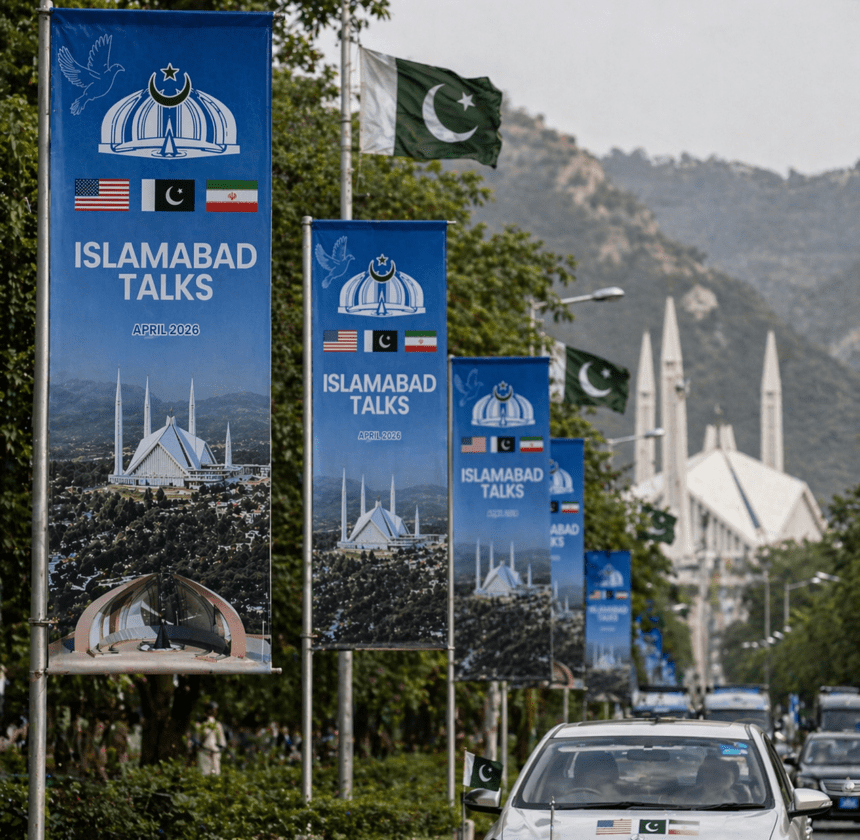
ISLAMABAD/WASHINGTON, April 21, 2026 — A fragile U.S.-Iran cease-fire is heading into its final hours with diplomacy still wobbling, not settling. American and Pakistani officials say a second round of talks in Islamabad is being prepared, but Iran has publicly cast doubt on whether its delegation is even on the way, leaving the fate of the truce hanging over the region.
The immediate problem is simple enough: Washington is signaling that negotiations are still alive, while Tehran is signaling something closer to hesitation, maybe even open distrust. Iranian state television said Tuesday that “no delegation from Iran” had yet visited Islamabad, even as Pakistani mediators moved ahead with security preparations and diplomatic outreach tied to a possible new round of talks.
That matters because the current two-week cease-fire, which began on April 8, is due to expire on Wednesday, April 22, Washington time. President Donald Trump has said he is “highly unlikely” to extend it if no agreement is reached, adding another layer of pressure to negotiations that already look strained.
On paper, there is still a path to talks. Reporting from the Associated Press and The Washington Post says Vice President JD Vance is expected to lead the U.S. side, with Pakistan again acting as mediator after hosting the first high-level round on April 11 and 12. That earlier meeting ended without a deal, but it was still notable as one of the most significant direct engagements between Washington and Tehran in decades.
Still, the mood now is darker than it was even a week ago.
Iranian parliament speaker and chief negotiator Mohammad Bagher Qalibaf has said Tehran will not accept negotiations “under the shadow of threats,” and warned that Iran is prepared to unveil “new cards on the battlefield.” Those comments, taken alongside the state media denial about any delegation reaching Pakistan, suggest Iran is trying to avoid looking cornered as the deadline closes in.
From the U.S. side, the message has been no less blunt. Trump has publicly accused Iran of violating the cease-fire and warned that military action could resume if talks fail. The White House position, at least in public, is that diplomacy remains possible — but not indefinitely.
The deeper issue is trust, or really the absence of it. The first Islamabad talks stalled over core disputes, including Iran’s nuclear program, and tensions have only worsened since then. U.S. actions involving Iranian-linked vessels in and around the Strait of Hormuz have further inflamed the situation, with Tehran condemning the moves as piracy and pointing to them as proof that Washington is negotiating while tightening pressure at sea.
That maritime front is not some side story. The Strait of Hormuz remains one of the world’s most critical oil chokepoints, and the latest crisis has squeezed Iranian exports while rattling broader energy markets. Any collapse of the cease-fire would almost certainly push those fears higher and revive worries of a wider regional confrontation.
Pakistan, for its part, has tried to keep the diplomatic channel from breaking altogether. Officials in Islamabad have tightened security, and Foreign Minister Ishaq Dar has been speaking with regional counterparts, including Egypt’s foreign minister, as part of a broader push to keep dialogue alive. But mediation only works if both sides show up — and as of Tuesday, that remained the central uncertainty.
So this is where things stand: the venue is effectively ready, the mediators are still working, and Washington says it wants another round. Iran, though, is keeping everyone guessing. That may be tactical. It may be genuine indecision. Either way, the ambiguity itself has become part of the story.
With the cease-fire set to expire within hours, the region is back in that uncomfortable place where one delayed flight, one public statement, one misread signal can suddenly matter a lot. Diplomacy hasn’t collapsed yet. But it’s no longer moving with any real sense of certainty either.