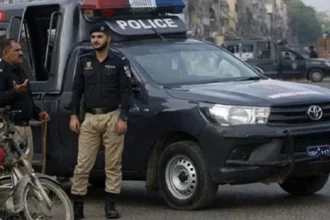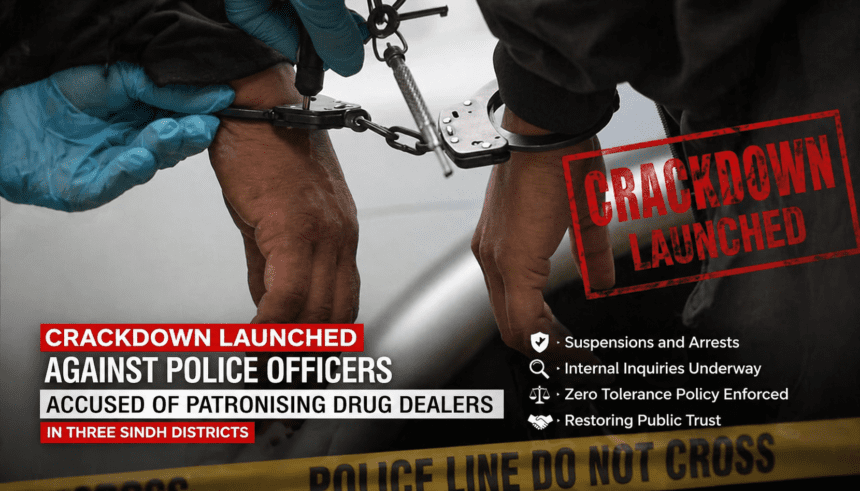
Karachi/Mirpurkhas: A major departmental crackdown has been launched in Sindh against police officers and personnel accused of protecting or facilitating drug traffickers and other criminal networks. According to available details, action began after the Sindh police chief took notice of the matter, leading to an inquiry against more than 50 officials. The reported list includes 33 officers and personnel from Mirpurkhas, 10 from Tharparkar, and 7 from Umerkot. A senior officer was appointed as inquiry officer, while show-cause notices were issued to the accused personnel seeking their explanations.
This was not seen as a narrow anti-drug operation alone. The allegations involve not just patronage of drug dealers but broader facilitation of criminal activity, links with unlawful networks, and misuse of police authority. Officials also signaled that action would be decided after reviewing the officers’ replies, and that dismissal from service remained a possibility if the charges were proven.
But there’s a more troubling layer to the story. Later reports claimed that despite the inquiry, many of the officers named in the list continued operating their alleged “system” without much fear. It was further claimed that inquiries against more than 53 personnel from Mirpurkhas, Umerkot and Tharparkar had been assigned for investigation, while sources alleged that over 70 percent of those under scrutiny had effectively ignored the process and remained allegedly involved in unlawful activity. If true, that points to a deeper problem: not just misconduct, but weak enforcement of accountability after the initial crackdown.
The issue remained sensitive because Mirpurkhas Division continued to feature in anti-narcotics policing discussions. On April 3, 2026, during a visit to Mirpurkhas, the Sindh police chief directed officers to take strict action against narcotics, especially gutka, mawa and other drugs, under a renewed strategy. He also stressed a zero-tolerance policy and called for stronger evidence in narcotics cases.
Taken together, the story is bigger than one round of notices. It speaks to a recurring tension inside policing in Sindh: the gap between announced crackdowns and visible outcomes. The inquiry clearly signaled concern at the top. Whether it delivered lasting reform is still unclear. What is evident, though, is that Mirpurkhas, Umerkot and Tharparkar were all pulled into the same accountability net, and the allegations were serious enough to trigger action at the highest provincial police level.