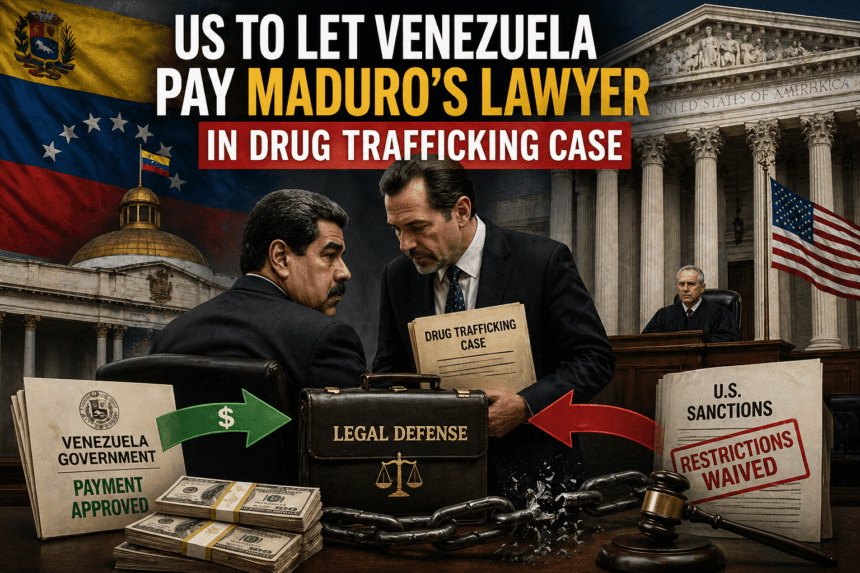
The Trump administration has decided to let Venezuela use state funds to pay legal fees for Nicolás Maduro and his wife, Cilia Flores, as they fight drug-trafficking charges in New York, reversing an earlier position that had blocked those payments under U.S. sanctions rules. Bloomberg reported the change on April 25, 2026, describing it as a clear shift by U.S. officials after weeks of dispute over whether the couple could use Venezuelan government money for their defense.
The issue had become a serious point of contention in court. In late March, Maduro’s lawyer argued that blocking Venezuelan funds was undermining his client’s right to chosen counsel, while a federal judge pressed the government on why those restrictions should remain in place if they interfered with the defense in a criminal case.
Earlier reporting said the Treasury Department’s sanctions office had initially allowed a payment exception and then reversed it within hours, leaving Maduro’s legal team to argue that the U.S. was effectively preventing Venezuela from covering the costs of his defense. At the time, the dispute was important enough that Maduro’s lawyers sought dismissal of the charges or other court intervention.
The new decision does not end the criminal case itself. It simply clears the way for Maduro and Flores to pay their lawyers with Venezuelan funds while the prosecution moves forward in New York. That makes this less a diplomatic breakthrough than a legal and procedural reversal with potentially major consequences for how the defense is conducted.
The broader significance is political as well as legal. The funding dispute had exposed a tension inside the U.S. position: Washington was pursuing Maduro in a high-profile criminal case while also using sanctions that, according to his lawyers, limited his ability to mount a defense. By allowing the payments now, the administration appears to be stepping back from a stance that risked becoming a constitutional problem in court.