ISLAMABAD — Public and goods transport services have resumed in the federal capital after days of tight movement controls linked to high-level security arrangements for the latest round of US-Iran talks in Islamabad. The capital administration said all types of public and cargo transport were again being allowed into the city, with bus stands reopened across Islamabad, though the Faizabad terminal remained closed and parts of the Red Zone were still under restrictions.
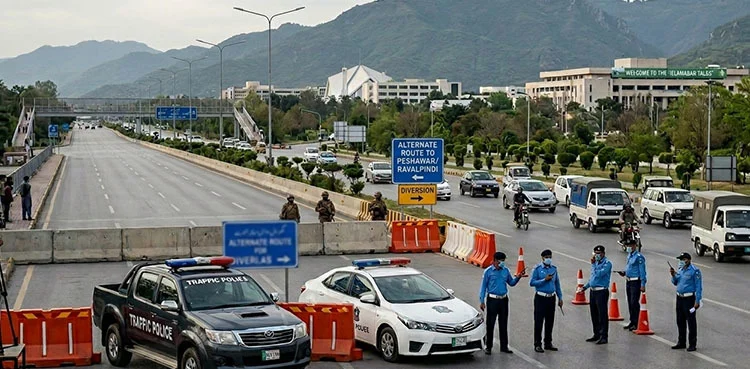
The rollback marks a noticeable shift from the lockdown-style measures imposed earlier in the week, when authorities in Islamabad and Rawalpindi suspended public, private and goods transport, sealed sensitive routes, and tightened access around key government and diplomatic areas. At the height of the operation, traffic police also warned that the Islamabad Expressway from Korral to Zero Point would remain closed, while movement on Srinagar Highway could be stopped intermittently because of the arrival of foreign delegations.
Even with transport coming back, the city is not entirely back to normal. Official notices and local reporting show that the Red Zone and adjoining areas have continued to face strict controls, and commuters have still been advised to avoid unnecessary travel near the most sensitive parts of the capital. Reuters photographs published by Dawn over recent days also showed heavy deployment, containers, and traffic diversions near central Islamabad as the talks continued.
For residents, traders and transporters, the reopening is more than a routine administrative decision. The earlier shutdown had choked supply lines and daily commuting in both Islamabad and Rawalpindi, adding pressure on wholesale movement and everyday business activity. That is why the resumption of goods transport matters just as much as passenger movement: it signals an effort to steady supply chains while the security footprint remains in place. That said, the uneven reopening — especially with Faizabad still shut and the Red Zone still restricted — suggests the administration is trying to strike a balance rather than declaring a full return to ordinary city life.
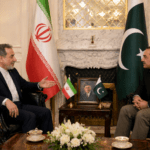
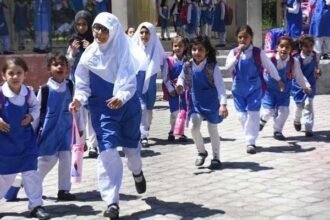
The wider backdrop is unusually sensitive. Pakistan has been hosting what local media have described as the second phase, and then later rounds, of US-Iran talks in Islamabad, prompting extraordinary security arrangements across the capital and Rawalpindi. In the run-up, authorities moved schools and some offices online, announced public holidays in Islamabad, and expanded road closures around the city’s core administrative zone.
For now, the practical message for commuters is fairly simple: transport is running again, but not everywhere, and not without caveats. Bus operations have resumed in most of the city, parks and hiking trails have reopened, and goods vehicles are being allowed back in, yet the most heavily guarded parts of Islamabad remain tightly managed. In this kind of week, honestly, “resumed” does not quite mean “fully restored.” It means the capital is breathing again, just under watch.