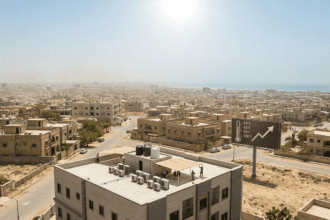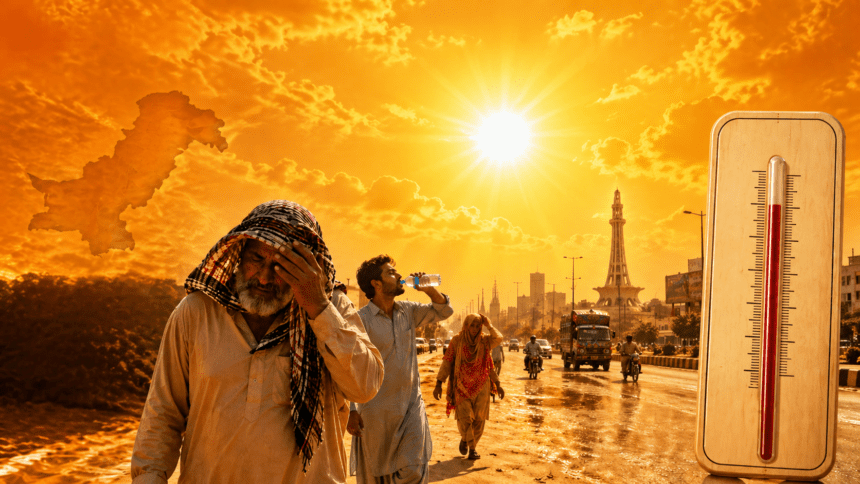
Pakistan’s Met Office has warned that an intense hot spell is set to grip large parts of the country, especially the plains, as a high-pressure system builds in the upper atmosphere and spreads over most regions. According to the Pakistan Meteorological Department, the heatwave is expected to strengthen from April 26, expand across much of the country by April 27, and persist through at least April 30, with some southern areas facing elevated temperatures into May 1.
The sharpest impact is expected in the country’s southern belt. PMD-linked reporting says daytime temperatures in Sindh, southern Punjab, and Balochistan are likely to stay around 5°C to 7°C above normal from April 26 to May 1. In the upper half of the country — including central and upper Punjab, Islamabad, Khyber Pakhtunkhwa, Kashmir, and Gilgit-Baltistan — temperatures are forecast to remain about 4°C to 6°C above normal between April 27 and April 30.
That makes this more than a routine summer warning. The advisory points to pressure on already strained water resources and rising health risks, especially for children, the elderly, and people who work outdoors. Heat-related illness, dehydration, and exhaustion tend to climb quickly during the first major hot spell of the season, partly because people have not yet adjusted to the jump in temperature. This is an inference based on the PMD’s heatwave warning and the early-season timing described in current coverage.
Officials have urged the public to avoid unnecessary exposure to direct sunlight during daytime hours, stay hydrated, and take extra care with vulnerable groups. Farmers were also advised in current reporting to manage crop and livestock activity carefully, since prolonged heat can hit both field work and water demand at the same time.
The warning comes as Pakistan heads into another season of climate stress, with extreme swings in weather increasingly shaping daily life as much as headline politics. For now, though, the immediate story is simple and serious: the plains are heading into a punishing stretch of heat, and the Met Office wants people to prepare before the worst of it arrives.