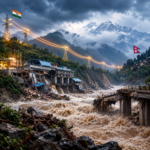
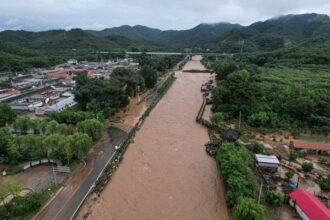
KASUR/LAHORE — India’s sudden release of excess water into the Sutlej River has caused severe flooding in Punjab’s Kasur district, inundating Ganda Singh Wala and surrounding villages, and destroying thousands of acres of farmland.
According to local officials, rescue workers have begun shifting residents and livestock to safer ground. Several villages in Burewala were cut off after floodwaters swept through the Sahu Ka area and breached the Sahu Ka–Chishtian road.
Widespread Losses in Punjab
In Bahawalpur and Bahawalnagar, dozens of farming families watched as floodwaters submerged their cotton, rice, and sesame crops. Many villagers were forced to abandon their ancestral homes, wading through waist-deep water with whatever belongings they could carry.
The Flood Forecasting Division (FFD) in Lahore reported that a medium-level flood is currently passing through Head Sulemanki. The Chenab River is also rising, with low floods recorded at Marala and Khanki.
Meanwhile, the Indus River system is experiencing pressure as well. Moderate flooding has been reported at Guddu and Sukkur barrages, while Tarbela, Kalabagh, and Chashma reservoirs are witnessing water levels high enough to create low-flood situations, according to the FFD.
India Issues Flood Warning After Months of Silence
The flooding comes as India and Pakistan resumed limited communication under the Indus Waters Treaty (IWT). On August 24, the Indian High Commission in Islamabad alerted Pakistan about a potential major flood in the Tawi River at Jammu — the first such contact since the May military standoff between the two nuclear-armed neighbours.
The IWT, signed in 1960 with World Bank mediation, regulates water sharing between the two countries. While India announced in April that it would hold the treaty “in abeyance” following the Pahalgam attack in IIOJK, experts note that neither country can legally suspend or terminate the pact unilaterally.
Background Tensions
India accuses Pakistan of supporting the April militant attack in Pahalgam, which killed 26 people — a claim Islamabad denies. The incident triggered heavy fighting in May, marking the most serious escalation between the two countries in decades, before a US-brokered ceasefire was reached.
Despite the strained ties, Sunday’s flood warning suggests that both sides continue to recognize the practical necessity of communication on water flows — particularly during the monsoon season, when sudden discharges can devastate downstream communities.