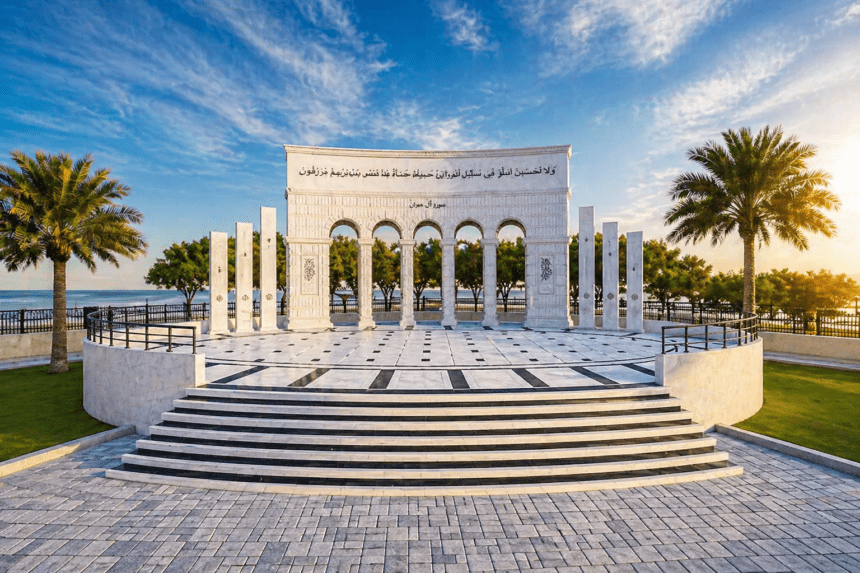
Construction crews at Rawalpindi’s busy Kutchery Chowk are finalizing a new landmark, the Marka-i-Haq monument. It sits at the heart of the city’s judicial and administrative hub, replacing the former landscape with a structure intended to serve as a symbol of local identity.
The project has reshaped one of the city’s most congested intersections. For months, commuters navigated detours and narrowed lanes as heavy machinery occupied the center of the roundabout. Now, the monument stands as a permanent fixture, forcing a permanent change in traffic flow patterns for thousands of daily travelers.
Local authorities maintain the monument honors the historical significance of the area, though public opinion remains divided. Some residents see it as a welcome aesthetic upgrade to a drab intersection. Others argue the space could have been better used to address the chronic traffic bottlenecks that define Kutchery Chowk.
“We needed better road management here, not more concrete,” said a local lawyer who works in the adjacent district courts. He noted that while the structure is visually striking, it does little to alleviate the gridlock that frustrates commuters during peak hours.
The design features elements meant to reflect the region’s legal and historical heritage. Contractors are currently applying finishing touches to the stonework and lighting rigs, with officials aiming for a formal unveiling later this month.
Despite the ongoing construction, the monument is already a focal point for the area. Whether it becomes a beloved city landmark or remains a point of contention among frustrated motorists, it has fundamentally altered the character of the Kutchery intersection.
With the scaffolding coming down, the city is left with a new centerpiece—and a continuing debate over whether Rawalpindi’s urban priorities match the vision of those who commissioned it.