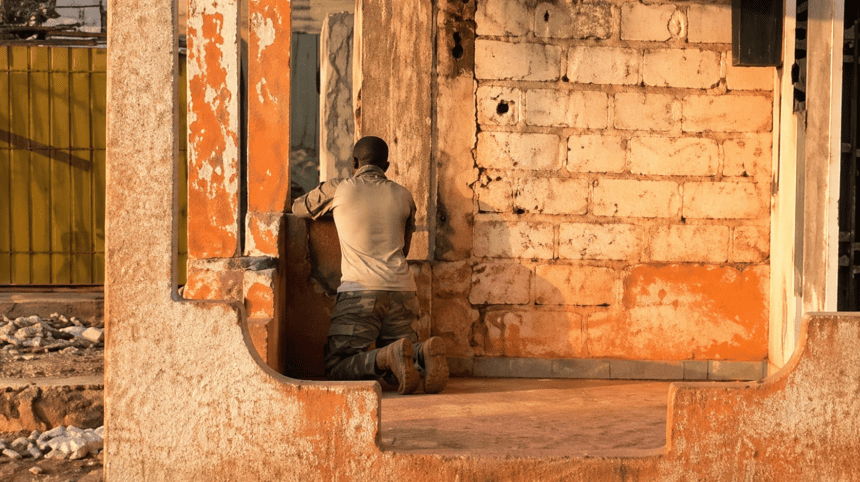
BAMAKO — Coordinated attacks across Mali on April 25 jolted the country back into a familiar nightmare: gunfire near the capital’s international airport, strikes on military positions, and reports of assaults stretching from Bamako to Kati, Gao, Kidal and central Mali. By the end of the day, the scale of the operation had raised a hard question for Mali’s rulers — how armed groups were able to hit several strategic locations almost at once.
Mali’s army said unidentified “armed terrorist groups” had targeted selected sites and barracks in the capital, adding that troops were engaged in fighting back. Later, officials said the situation was under control. Early casualty reporting remained incomplete, but Associated Press reporting cited at least 16 wounded.
The claim of responsibility came quickly. Jama’at Nusrat al-Islam wal-Muslimin, or JNIM — an al-Qaeda-linked coalition active across the Sahel — said it had carried out the operation. Reporting also said the group presented the attacks as a joint effort with the Azawad Liberation Front, a Tuareg-led separatist movement, a detail that matters because it points to tactical cooperation between actors the Malian state has often treated as overlapping but distinct threats.
That is what makes this episode more than another ugly security incident. The message was geographical as much as military. Bamako is supposed to symbolize state control. Kati is one of the country’s most important military hubs. Gao and Kidal sit deep inside the conflict landscape that has defined northern Mali for years. Hitting all of that in one sweep, or close to it, suggested planning, mobility and confidence. It also undercut official claims that major urban centers and recaptured areas were becoming more secure.
Analysts cited in major coverage described the offensive as the biggest or most consequential such assault in years, even the largest since 2012 in some accounts. That judgment was not based only on the number of locations involved, but on the visibility of the attacks and the symbolic value of the targets. In plain terms, the insurgents did not just strike remote outposts. They forced Malians and foreign observers to watch the state being challenged in places that are supposed to project authority.
The background to this is bleak and by now deeply entrenched. Mali, alongside Burkina Faso and Niger, has spent years battling jihadist violence linked to al-Qaeda and the Islamic State. After military takeovers in the region, the ruling juntas shifted away from Western security partners and leaned more heavily on Russian support. Yet the security picture has kept deteriorating, and armed groups have adapted rather than faded.
There had been warnings. Research and security analysis published before this weekend had already pointed to JNIM’s growing operational range, including attacks aimed at Mali’s economic arteries and pressure on Bamako itself. Other analysis noted increasing cooperation and evolving tactics, including drone-enabled operations in the Sahel. So while Saturday’s strikes were shocking, they did not come out of nowhere. They looked, instead, like the latest proof that the insurgency has become more flexible, more patient and harder to contain.
For Mali’s junta, that is the real damage. Not just the blasts, not just the wounded, not even the immediate disruption around the airport and military sites. It is the renewed sense that the battlefield no longer sits neatly on the margins. Once that perception takes hold, every official promise of restored order becomes harder to sell.
The next question is whether these attacks were a dramatic one-day show of force or the opening move in a broader campaign. At this stage, reporting still leaves gaps, especially on the exact duration of insurgent presence at specific sites and the full casualty toll. But one conclusion is already hard to avoid: the reach of Mali’s insurgents remains very real, and after April 25, impossible to dismiss.