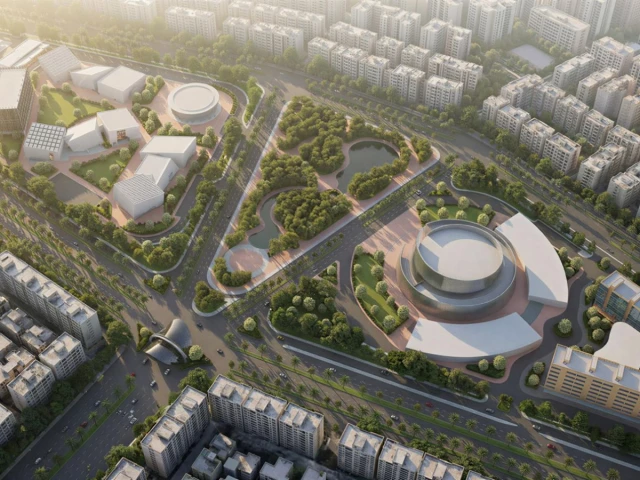
Punjab Chief Minister Maryam Nawaz has announced a Film City project in Lahore, pitching it as a major step in the province’s attempt to revive Pakistan’s struggling film industry and rebuild production infrastructure in the city once seen as the country’s cinematic heartland. Official and media reports say the project will be developed within Nawaz Sharif IT City in Lahore’s Central Business District, alongside a film studio, a post-production lab and what the government says will be Pakistan’s first dedicated film school.
The announcement did not come out of nowhere. Maryam Nawaz had already directed officials in April 2025 to move ahead with Punjab’s first Film City and related facilities, while a provincial committee was also formed to support quality film production financially. That makes the latest move look less like a one-off headline and more like part of a broader state-backed effort to rebuild the industry’s production pipeline from training to shooting to editing.
According to official briefings, the government wants the Lahore project to function as an integrated media hub rather than just a symbolic real-estate announcement. The plan, as described in public reporting, includes space for studio work, post-production operations and film education, all tied to the wider Nawaz Sharif IT City scheme, which the Punjab government has been promoting as a flagship technology and investment zone. Nawaz Sharif IT City itself spans 853 acres, according to APP reporting on the project.
There is a political and cultural message here too. Lahore’s old film ecosystem has been weakened for years by shrinking investment, outdated infrastructure and the migration of technical work abroad. Government statements and local reporting have framed the Film City plan as an attempt to reverse that decline, create jobs for artists and technicians, and give local producers access to facilities they often struggle to find inside Pakistan.
What remains less clear, at least from the public material available so far, is the implementation timeline, final cost and delivery model. Officials have confirmed the project direction, land allocation within IT City and the supporting policy framework, but detailed construction milestones and operational dates have not been spelled out in the reporting I found. That means the headline is significant, but the real test will be whether the government can move from approvals and committees to a working production complex.
For now, the announcement signals an ambitious attempt to fuse culture with infrastructure policy: a Film City inside a technology zone, backed by a provincial government that says it wants Lahore back in the filmmaking business. It is a familiar promise in South Asia. This time, Punjab is trying to make it look concrete.