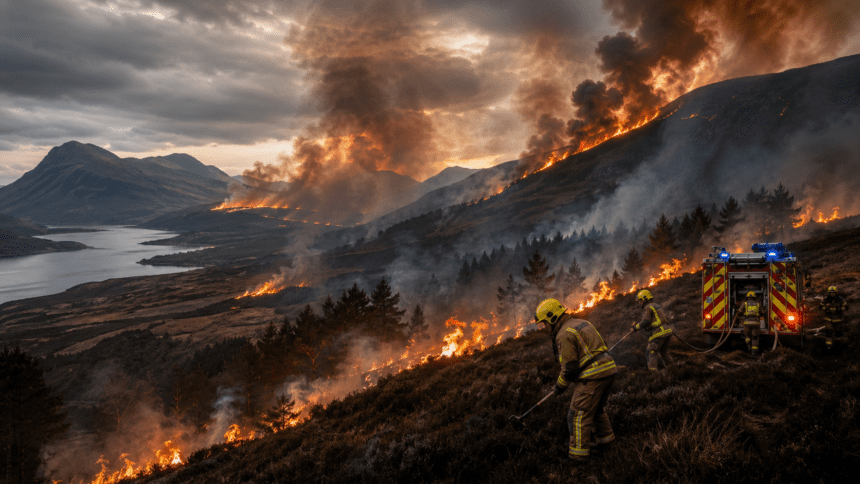
A series of wildfires broke out across parts of Scotland over the weekend as fire authorities warned that dry weather and unusually high spring temperatures had created an “extreme” risk in some areas and a very high risk in others. The Scottish Fire and Rescue Service said its wildfire warning covered western, central and eastern Scotland from April 23 to April 26, with western Scotland moving from very high risk on Thursday to extreme risk from Friday, April 24 through Sunday, April 26.
The warning was not abstract. Fires were reported in several areas as conditions turned dangerous for grass, heath and woodland blazes. One of the clearest examples came in Aberdeen, where crews were called to a large fire on Kincorth Hill on the evening of April 23, sending up a heavy smoke plume and prompting advice for nearby residents to keep doors and windows shut.
Officials had already been sounding the alarm. In its public notice, the Scottish Fire and Rescue Service, working with the Scottish Wildfire Forum, urged people not to light outdoor fires and warned that even seemingly small flames could spread fast under the dry conditions. The service said the risk had risen after a prolonged spell of dry weather left vegetation unusually combustible for this time of year.
That is the real story here: Scotland is not dealing with one isolated blaze, but with a pattern that firefighters now treat as a recurring seasonal threat. The fire service has said wildfire danger assessments are issued when conditions across parts of the country make fast-moving outdoor fires more likely, and this latest alert was broad enough to cover much of the country.
The risk profile also reflects a wider trend. Scotland’s fire service has expanded its wildfire preparedness work in recent years, and official guidance now treats these fires as a serious operational challenge rather than a rare rural event. The public message has been simple and blunt: avoid outdoor flames, follow access-code guidance, and report large fires immediately.
For residents, walkers and land users, the warning carries obvious practical consequences. A patch of dry ground, a disposable barbecue, or even a poorly controlled burn can turn into a major incident very quickly when wind and low moisture combine. That is why authorities are leaning so heavily on prevention while crews continue responding to outbreaks.
Even where individual fires are brought under control, the bigger concern remains the same: the conditions that helped spark them have not disappeared overnight. With Scotland under an elevated wildfire threat through April 26, emergency services are likely to stay on alert for further flare-ups.