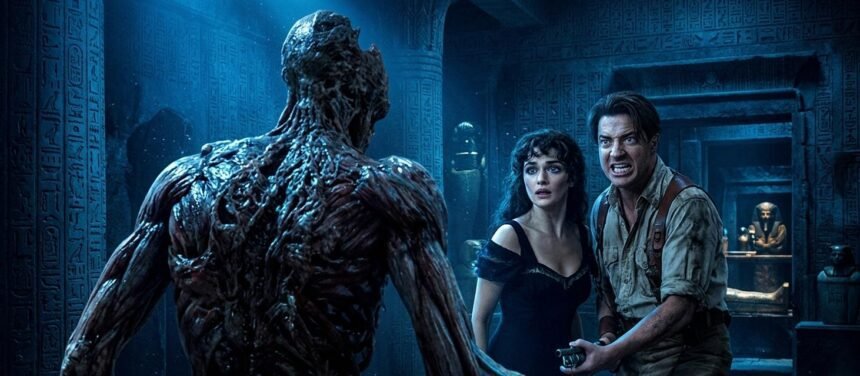
LOS ANGELES — After years of rumors, false starts and a lot of fan wish-casting, The Mummy 4 is now firmly back on the table, with Brendan Fraser and Rachel Weisz returning to the franchise that made them one of early-2000s adventure cinema’s most recognizable on-screen pairs. Recent entertainment coverage says Universal has locked the project in as a direct continuation of the Fraser-era series rather than another reboot.
The film is being directed by Matt Bettinelli-Olpin and Tyler Gillett, the filmmaking duo behind Radio Silence, with David Coggeshall writing the script. That creative lineup matters because it suggests the studio is not simply dusting off an old property for nostalgia’s sake. It is trying to give the franchise a new jolt while still leaning on the chemistry and tone that audiences remember from the 1999 original and The Mummy Returns.
One of the biggest points of attention around the project is the release date. Earlier reporting said Universal had set the film for May 19, 2028, but more recent reports indicate the studio has since moved it up to October 15, 2027. That shift, if it holds, is a meaningful one. A mid-October slot gives the movie a more monster-friendly corridor and hints that Universal may be positioning it a little closer to horror-adventure than pure summer spectacle.
For Fraser, the return has an obvious emotional pull. He has openly confirmed that the sequel is real, and trade-style coverage over the past few months has framed the project as something closer to a homecoming than a routine franchise revival. Rachel Weisz’s return matters just as much. Her absence from the 2008 third film was one reason many longtime fans never fully embraced that installment, so bringing her back alongside Fraser instantly changes how this sequel is being perceived.
That is really the heart of the story. Universal appears to have learned from the 2017 Tom Cruise-led The Mummy, which was supposed to help launch the studio’s “Dark Universe” but instead fizzled out. The new film is going in the opposite direction: less reinvention, more restoration. Rather than asking audiences to buy into a new mythology from scratch, the studio is betting that viewers still want Rick and Evelyn O’Connell back in the center of the action.
Plot details are still being kept under wraps, and that is not unusual this far out. But the broad direction is clear enough now. This is being sold as a revival of the adventure-horror formula that made the earlier Fraser films durable crowd-pleasers — fast-moving, supernatural, slightly pulpy, and built around personality as much as spectacle. In a franchise landscape crowded with grim reboots and multiverse overload, that older recipe may actually be the most modern move available.