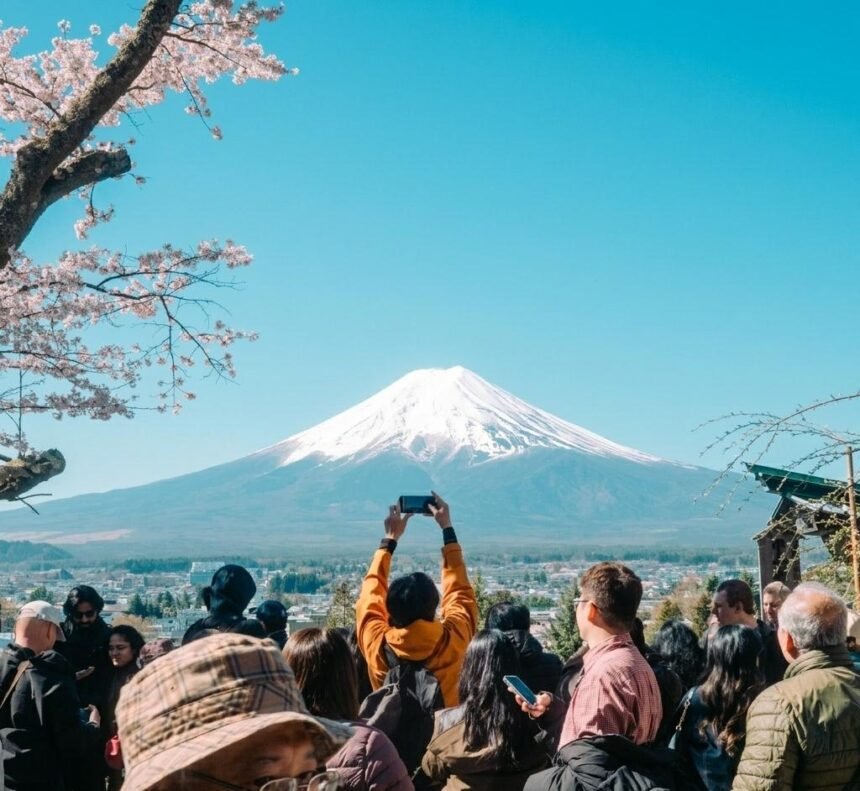
TOKYO — Japan spent years trying to bring more visitors in. Now, in some of its most famous destinations, the struggle is about how to keep tourism from overwhelming everyday life.
The pressure is easy to see in the numbers. Japan recorded a record wave of inbound travel in 2025, and the national government has openly acknowledged that some destinations are dealing with overcrowding, broken rules and growing friction between visitors and residents. In a policy update published this month, the Japan Tourism Agency said concentrated tourism in certain places and time periods has led to “excessive congestion” and “manners violations” that affect locals’ quality of life and can also reduce visitor satisfaction.
That fight is playing out most visibly in postcard-pretty places that have become social-media magnets. Near Mount Fuji, city officials in Fujiyoshida scrapped this year’s cherry blossom festival after warning that bad tourist behavior had become too disruptive to residents. Officials cited trespassing, littering, traffic problems and other conduct that, in their view, had crossed a line. AP reported that the town was also stepping up security and limiting access in peak periods as it tried to contain the damage.
Around Mount Fuji more broadly, authorities have moved from warnings to firmer controls. Yamanashi Prefecture says the 2026 climbing season will again run from July 1 to September 10, with reservations and managed access continuing as part of a wider effort to handle crowding and safety on the mountain. That follows earlier steps such as gates, fees and limits aimed at reducing dangerous rush climbs and easing pressure on the most heavily used routes.
Kyoto, maybe the clearest symbol of Japan’s tourism boom and backlash, has already taken action in its historic Gion district. Tourists were barred from some private alleyways after repeated complaints that visitors were ignoring signs, entering private spaces and harassing geiko and maiko for photographs. It was one of those moments that made the broader problem feel less abstract. This was not just about crowds. It was about boundaries.
Elsewhere, the response has become even more visible. In Otaru, on the northern island of Hokkaido, authorities deployed security guards to control tourists crowding a popular photo spot after risky behavior and congestion raised safety concerns. The issue there was not simply noise or inconvenience; local officials were responding to the real danger created when visitors chased the perfect image in narrow, exposed areas.
Tokyo’s message, at least on paper, is that Japan does not want to shut the door. It wants tourism to keep growing, but in a way that spreads visitors out and makes destinations more livable. The national government says it is supporting local measures to prevent and suppress overtourism, while encouraging communities to design rules that fit local conditions. That sounds tidy. On the ground, it is messier. Some towns are putting up barriers, some are hiring guards, some are restricting access, and some are simply canceling events they once promoted.
The tension at the center of all this is pretty stark. Tourism is good for business, jobs and local tax revenue. But when busloads of visitors block roads, wander into private property, harass performers, ignore smoking rules or treat neighborhoods like open-air film sets, the economic argument starts to wear thin for the people who actually live there. That is why Japan’s current push is not really a war on tourists. It is a campaign against the idea that being a tourist excuses anything.