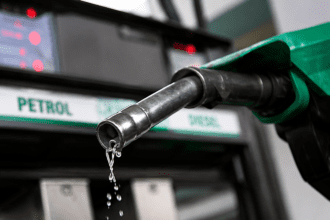
The national average for a gallon of regular gasoline climbed to $3.58 this morning—a 12-cent jump in just four days. Drivers from California to New York are feeling the immediate sting at the pump, as global markets react to the escalating military confrontation between Israel and Iran.
The surge isn’t just about current supply; it’s about fear. Traders are pricing in the risk that the Strait of Hormuz—a narrow waterway through which roughly 20% of the world’s total oil consumption passes—could be shuttered or heavily restricted. When that chokepoint sneezes, the global energy market catches a fever.
“We are seeing a risk premium being baked into every barrel of oil,” said Sarah Miller, a senior energy analyst at Stratos Capital. “Markets don’t like uncertainty, and right now, there is no clarity on how far this conflict spreads.”
West Texas Intermediate (WTI) crude, the U.S. benchmark, settled near $86 a barrel yesterday, up from $80 just a week ago. This shift is hitting refineries hard. They are paying more for raw crude, and those costs are moving downstream to the retail level faster than usual because gas station inventories are currently leaner than they were during the summer peak.
The White House is under pressure to release more from the Strategic Petroleum Reserve, though administration officials remain hesitant. They argue that the current price hike is driven by geopolitical instability rather than a physical lack of oil. However, political analysts suggest that if prices push toward $4.00 a gallon before the mid-month mark, the administration may be forced to act to curb voter frustration ahead of the election cycle.
For the average American household, this means an immediate tightening of the monthly budget. Transportation costs are the second-largest expense for most families, and the sudden volatility is forcing a shift in consumer behavior. Gas station operators report that sales of premium fuel have dipped as drivers switch to regular or consolidate their travel to save cash.
The situation remains fluid. If diplomatic backchannels fail to de-escalate the regional tensions, analysts warn that the current price climb is merely the opening act. Oil prices are reactive, and until tankers have a clear, safe path through the Persian Gulf, the volatility at the pump is unlikely to stabilize.