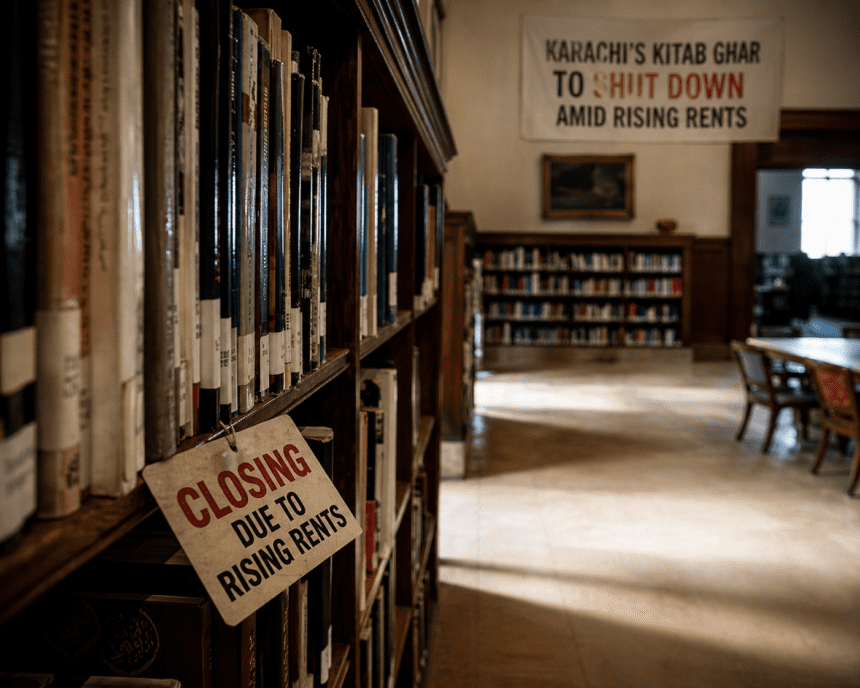
Karachi’s literary landscape is shrinking. Kitab Ghar, the decades-old bookstore that served as a sanctuary for students, researchers, and casual readers, is preparing to shutter its doors. The reason is as cold as it is common: a rent hike that the current business model can no longer sustain.
For years, the shop stood as a local landmark. It wasn’t just a retail space; it was a rare corner of the city where the digital noise of modern Karachi faded behind rows of weathered paperbacks and academic journals. Now, the owners have signaled that the economics of the area have shifted, making it impossible to keep the lights on.
The closure marks a quiet, painful shift for the neighborhood. Small, independent bookstores are vanishing across the metropolis, squeezed out by commercial real estate pressures that favor fast-food chains and corporate offices over cultural institutions.
“We’ve tried to hold on as long as we could,” one staff member told a regular customer earlier this week. “But the math doesn’t work anymore. You can’t pay this kind of rent selling books.” The loss hits the local student population hardest. For those attending nearby colleges, Kitab Ghar provided affordable access to reference materials that are often priced out of reach in newer, upscale shopping malls. Its disappearance leaves a void in the educational ecosystem of the district.
While developers argue that the rent increases reflect the rising value of the land, the city’s cultural observers see a different trend. They point to a pattern of “gentrification by default,” where the soul of Karachi’s streets is being priced out, one storefront at a time. As the shelves are cleared, the city loses more than just a shop.
It loses a physical archive of the neighborhood’s intellectual history. When the final sign comes down, it won’t just be the end of a business; it will be another quiet chapter closed on the city’s fading literary past.