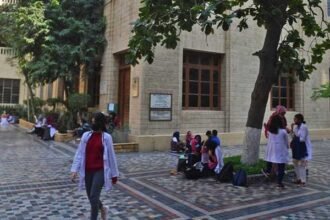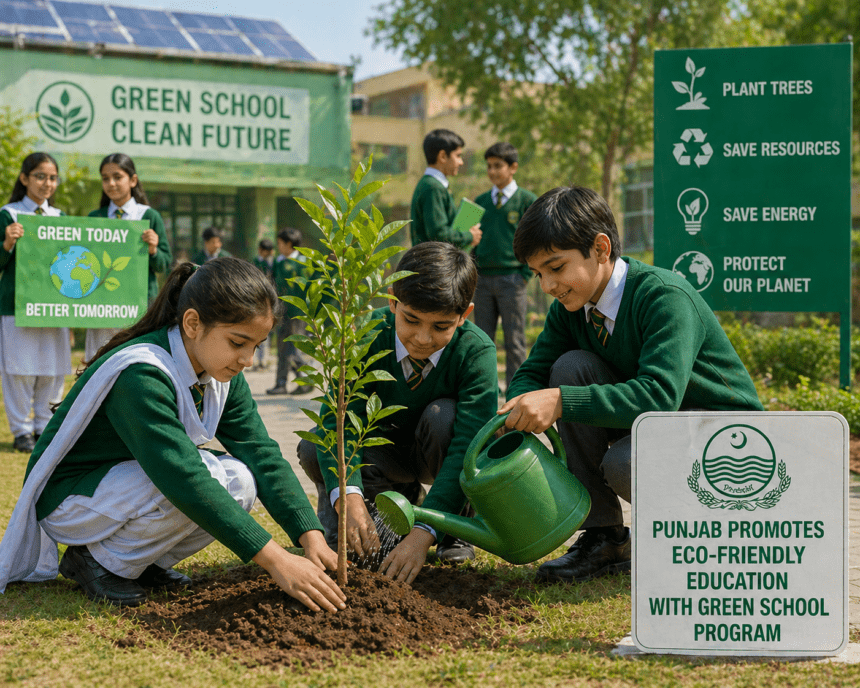
The Punjab government has officially kicked off its “Green School Program,” a mandatory initiative designed to integrate climate education and sustainable practices into the provincial public school curriculum.
The project aims to transform classrooms into hubs of environmental activism, starting with a pilot phase across major districts. The government isn’t just handing out textbooks. Schools are now required to maintain functional kitchen gardens, implement strict waste segregation protocols, and install solar-powered lighting systems.
Education officials confirmed that these measures are intended to move beyond theory, forcing students to engage with the climate crisis through daily, hands-on tasks. For years, the province’s education system has faced criticism for focusing on rote memorization.
This program attempts to break that cycle by tying academic performance to environmental stewardship. Students will now earn “green credits” for participation in tree-planting drives and energy-saving audits within their campuses. “We’re teaching them to be part of the solution, not just observers of the damage,” a senior education department official said. He noted that the program’s success hinges on whether local school administrations can actually manage the infrastructure upgrades required, a hurdle that has stalled similar government projects in the past.
The initiative comes as Punjab continues to struggle with record-breaking smog levels and erratic monsoon patterns. While the long-term impact on air quality remains theoretical, the shift in policy signals an attempt by the provincial government to address the ecological anxiety currently gripping the younger generation.
Critics argue that without a consistent budget for long-term maintenance of the solar units and garden irrigation, the program risks becoming a surface-level PR exercise.
The government, however, insists that the oversight committees formed at the district level will ensure accountability. Whether the program creates a lasting shift in behavior or simply fades into another bureaucratic checklist, the next six months of the pilot phase will be the true test. For now, the focus remains on getting the first wave of schools audited and operational by the end of the current term.