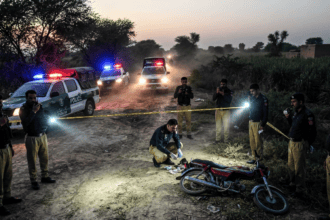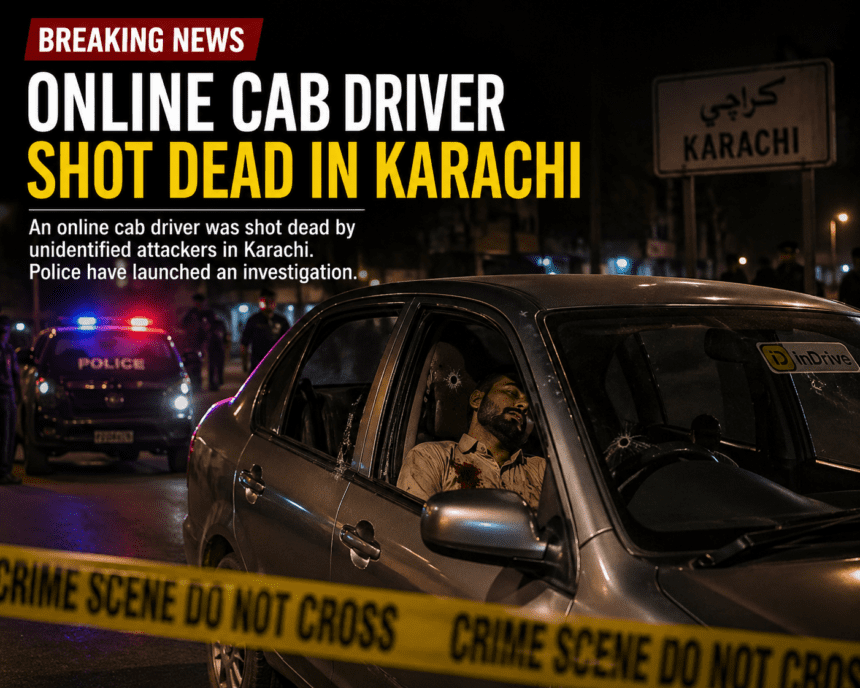
A 35-year-old online cab driver was shot dead late Tuesday night in Karachi’s Gulistan-e-Johar area, adding to the city’s rising toll of street crime and targeted violence.
Police identified the victim as Muhammad Arshad, a resident of Surjani Town who had been working for a ride-hailing service for the past three years. He was found slumped over the steering wheel of his white sedan near Block 13, his vehicle still running when patrol officers arrived on the scene.
Investigators say the motive appears to be robbery, though the precision of the shot has fueled speculation about a targeted hit. Arshad was struck by a single bullet to the head. His smartphone, wallet, and the day’s cash earnings were missing from the car.
“We are currently pulling CCTV footage from nearby commercial buildings,” said a senior investigation officer at the scene. “The attackers were likely on a motorcycle. They intercepted the vehicle, fired once, grabbed his valuables, and fled before anyone could intervene.”
Residents of the area gathered near the crime scene, voicing frustration over the lack of police presence in the neighborhood after sunset. For many in Karachi, the incident is a grim reminder of the daily risks associated with working late-night shifts in the city’s gig economy.
Family members gathered at the Jinnah Postgraduate Medical Centre (JPMC) early Wednesday morning, waiting for the autopsy to be completed. Arshad leaves behind a wife and two young children. His brother, who arrived at the hospital in tears, told reporters that Arshad had started his shift at 4:00 PM and was planning to head home by midnight.
“He told us he was just picking up one last passenger,” his brother said. “He never made it to that destination.”
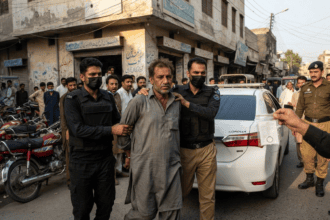
The Sindh Home Department has yet to issue a formal statement, but local police have registered a case against unidentified suspects. As of Wednesday afternoon, no arrests have been made.
The killing marks the third incident involving a ride-hailing driver in Karachi this month, highlighting a vulnerability that remains unaddressed by current city security protocols. Until authorities move beyond registering cases and start securing these high-risk zones, the city’s streets will remain a lethal gamble for those trying to make a living behind the wheel.