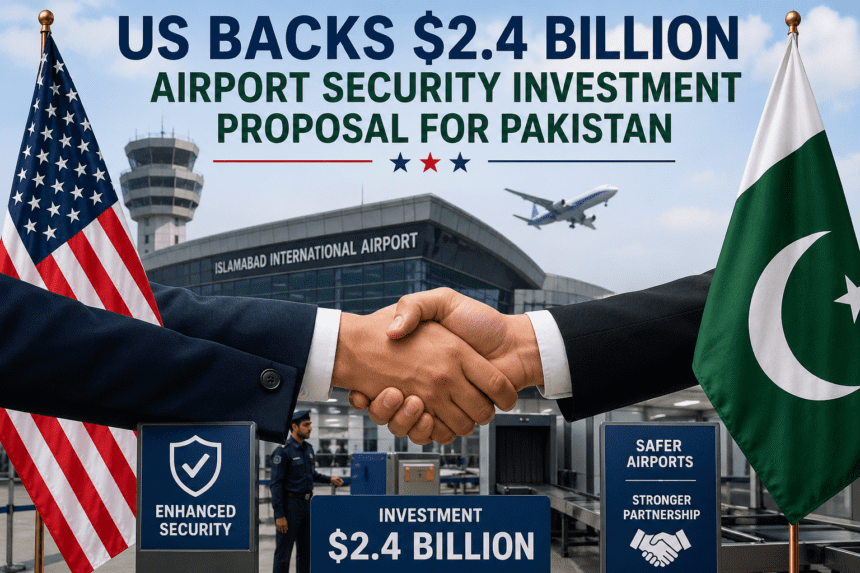
Pakistan is weighing a $2.4 billion airport security proposal backed by the United States, with the plan centered on installing advanced screening and monitoring systems at major airports to help detect criminals and other transnational threats, according to reports published on April 29 and 30. The proposal is tied to an American firm and, if it moves ahead, would mark one of the larger security-technology pitches now under consideration in Pakistan’s aviation sector.
The reporting suggests the project would go well beyond routine equipment upgrades. It is described as involving modern security screening, biometric capabilities, and passenger-data systems designed to strengthen border controls and improve the identification of suspicious travelers. That matters because airport security in Pakistan isn’t just about smoother passenger handling anymore; it sits right at the intersection of counterterrorism, anti-smuggling work, and wider concerns over cross-border crime.
There’s a practical reason this proposal is getting attention. Pakistan’s Airports Security Force says it is currently responsible for 25 operational airports, including 12 international and 13 domestic airports, a footprint that gives any large-scale security overhaul national significance from day one. The agency says its mandate covers aircraft, passengers, baggage, cargo, mail, and airport access control, which means a technology-heavy upgrade could touch nearly every layer of airport operations if adopted.
Even so, backing a proposal is not the same as approving it. At this stage, the available reporting points to U.S. support for the investment offer, but it does not show that Pakistan has formally signed off on the full package or announced an implementation timeline. That leaves several obvious questions hanging in the air: who would finance what, which airports would be prioritized first, how passenger data would be handled, and what safeguards would be put in place around privacy, oversight, and long-term system maintenance.
Still, the proposal lands at a moment when aviation security carries extra political weight. Pakistan’s airport security apparatus has long been tasked not only with preventing unlawful interference in civil aviation, but also with intercepting smuggling and other illicit activity moving through airports. In that sense, the size of the proposal is almost the story by itself. A $2.4 billion package is large enough to signal something more ambitious than replacing scanners or tightening entry gates. It points to the possibility of a deeper technological rebuild, one that could reshape how travelers are screened and tracked across the country’s busiest airports.
For Islamabad, the decision will likely come down to a familiar balancing act: the appeal of upgraded security infrastructure on one side, and questions over cost, sovereignty, procurement, and data control on the other. For now, the headline is simple enough — Washington has thrown its weight behind the proposal — but the harder part is still ahead. Pakistan now has to decide whether this is a security upgrade it wants, a financial commitment it can absorb, and a partnership it is comfortable deepening.