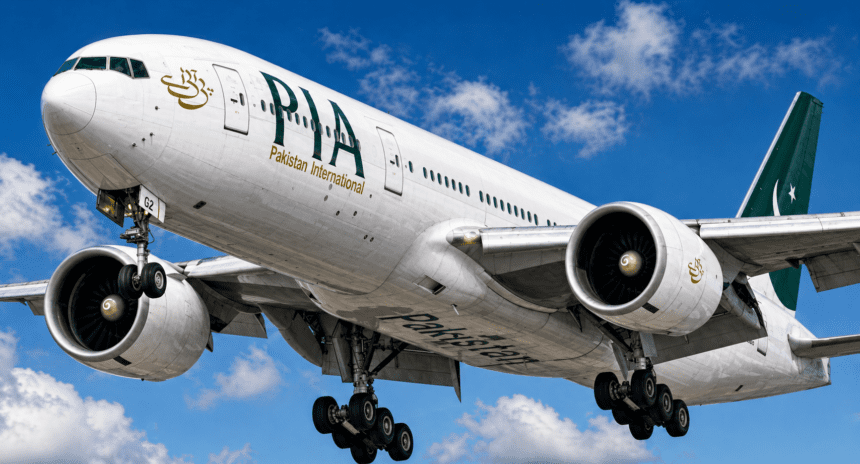
Pakistan’s competition regulator has cleared the sale of Pakistan International Airlines Corporation Limited to PIA Equity Ltd, removing another major hurdle in the government’s effort to hand control of the national carrier to a private consortium. The Competition Commission of Pakistan reviewed the transaction under Phase-I of Section 11 of the Competition Act and concluded that the deal does not raise competition concerns.
That matters because this wasn’t just a routine filing. The PIA transaction has been one of the country’s most closely watched privatisation efforts, tied to a broader push to cut the fiscal drag from state-owned enterprises and bring in private capital where repeated state management has failed to stop losses. Business Recorder, citing the regulator’s review, said the commission examined domestic and international passenger transport, cargo, postal carriage and technical aviation services before signing off.
The buyer, PIA Equity Ltd, is a special-purpose vehicle created on January 9, 2026 by a consortium led by Arif Habib Corporation. Other members named in the reporting include Fatima Fertilizer Company, Lake City Holdings, City Schools and AKD Group. The regulator treated the transaction as a conglomerate merger, essentially finding that the acquiring group does not already operate in the same aviation markets as PIA in a way that would create horizontal or vertical overlap.
In plain terms, the commission’s logic was fairly straightforward: Pakistan’s aviation market still has meaningful competition. On international routes, Gulf carriers such as Emirates, Qatar Airways and Etihad remain powerful players, while on domestic routes PIA faces competition from airlines including Airblue, AirSial, Fly Jinnah and Serene Air. The commission also noted that PIA’s market position has weakened over time, which undercuts the argument that the takeover would give the buyer outsized market power.
The clearance comes after the privatisation process had already moved substantially forward. Earlier reporting said the Arif Habib-led consortium won the auction for a 75 percent stake in PIA with a Rs135 billion bid, comfortably above the government’s reserve price. International coverage at the time described the sale as a landmark step in Pakistan’s reform programme, especially after years of failed or delayed attempts to offload the airline.
By mid-March, officials had told a Senate committee that the deal was expected to reach financial close by the end of April 2026. They also said the investor group had already formed PIA Equity Ltd and started work on a new management setup, including the search for a chief executive. That suggested the process had shifted from auction drama to the far less glamorous, but crucial, business of actually transferring control and preparing the airline for a reset.
For Islamabad, the sale is bigger than one airline. PIA has long stood as a symbol of the problems that pile up when politics, weak governance and commercial aviation collide. The government has been trying to restructure the carrier while limiting the burden on public finances, and the success or failure of this handover will be watched as a test case for future privatisations. International reporting on the December auction noted that the transaction formed part of a wider economic reform drive linked to Pakistan’s effort to stabilize its finances and improve investor confidence.
What happens next is the part that really counts. Regulatory clearance is important, obviously, but it doesn’t fix an airline on its own. The real challenge now is whether the new owners can turn approval on paper into a functioning commercial strategy — better management, tighter costs, fleet planning, route discipline, and some badly needed credibility with passengers. Pakistan has seen bold announcements before. This time, the hard part begins after the applause.