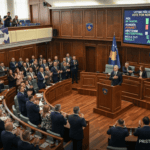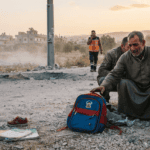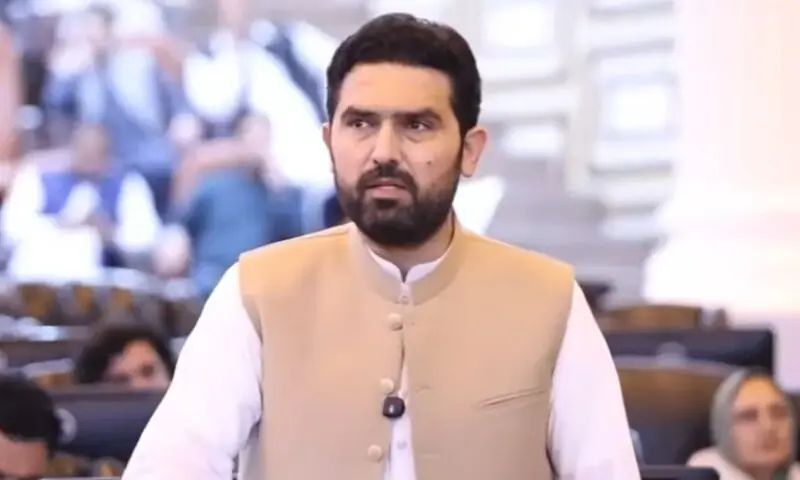
PESHAWAR: Khyber Pakhtunkhwa Chief Minister Sohail Afridi on Thursday signaled that his government may move to legislate against civilian casualties in drone strikes, after anger spread across tribal districts over a recent attack in Khyber that killed a minor girl and injured six members of her family. Speaking in the provincial assembly, Afridi said lawmakers had discussed bringing a law on drone attacks but claimed constitutional protections limited that route, adding that the province could still legislate against “collateral damage”.
The remarks came during a special assembly session convened as concern deepened over an uptick in suspected drone strikes in the province. Afridi did not spell out what the proposed law would contain, and no draft legislation or timeline was announced on the floor of the house. Even so, his words carried political weight because they suggested the provincial government wants to turn its repeated rhetoric against civilian harm into a formal legal response.
In a typically combative speech, the chief minister said he had repeatedly protested such strikes, only to be told afterward that the situation was understood and regretted. He went further, asking why such incidents seemed to hit ordinary people in KP instead of sensitive installations. Afridi also questioned what Pakistan had achieved through military operations over the last two decades, arguing that decisions made “behind closed doors” had damaged not only KP but the country as a whole.
He also took aim at the Action in Aid of Civil Power Ordinance, calling it a “draconian law”. Dawn noted that the 2019 ordinance authorises the armed forces to detain individuals anywhere in the province without assigning a reason and without producing the accused before a court of law, a power long criticised by rights advocates and opposition voices in the region.
The assembly debate was shaped by a fresh wave of outrage from KP’s tribal belt. A jirga earlier this week, organised after the Khyber strike, resolved that civilian deaths from both terrorism and drone attacks were unacceptable and said people in the tribal districts were paying a “double price”. Participants insisted the issue be taken up in the provincial assembly and demanded an end to what they described as a cycle in which locals were caught between militant violence and the fallout from operations.
Afridi said another jirga would be held on Saturday to decide the next course of action, and senior provincial officials suggested the response could escalate into wider protests. Shafi Jan, the chief minister’s special assistant on information, alleged the attacks were pre-planned and said the jirga would consider options ranging from demonstrations outside the KP Assembly to a march on Islamabad.
The chief minister’s position is not new, but this time it sounds a bit sharper. Since taking office, Afridi has repeatedly said KP would support peace efforts but would not accept “collateral damage” in the name of security. In October 2025, he warned that if any innocent life was lost again, “there will be accountability,” and said the province would not back any new operation carried out without taking local stakeholders into confidence. Later that same month, Dawn reported that he had already spoken to the provincial assembly speaker about legislation aimed at checking collateral damage in security operations and ensuring action where civilians were killed.
That history matters because Thursday’s statement suggests the idea has now moved back to the centre of KP’s politics, driven by public pressure from the chief minister’s own constituency and broader unease in the merged districts. Whether it becomes an enforceable law is another question. For now, Afridi has opened the door politically, but the details remain thin, and the province’s constitutional room to act against security-related excesses may yet become the real battleground.