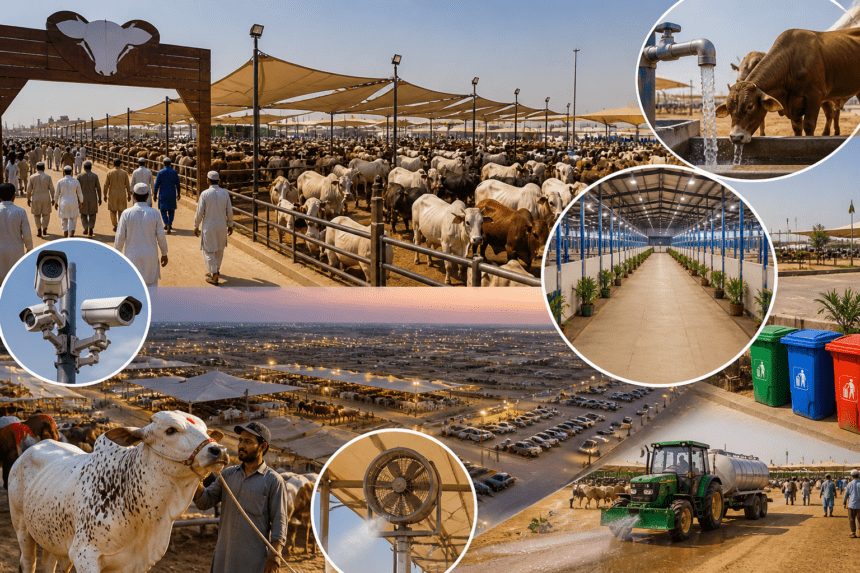
This season, Karachi’s main cattle market at Northern Bypass is standing out for three reasons at once: tighter organization, stronger visitor and trader facilities, and visibly rising activity ahead of Eidul Azha. Recent reporting says officials opened the market with a promise of better management and security arrangements, while city authorities also moved to tighten rules for cattle markets across Karachi through a permit-based system.
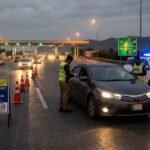
One big reason the market feels different this year is the push for more structured operations. Authorities have required market operators to obtain permits from the Commissioner’s Office and linked approvals to traffic, policing, and municipal coordination. That matters because it turns the mandi from a loosely managed seasonal space into a more regulated setup with greater official oversight.
Facilities are a major part of that story. Reports around the opening highlighted improved security and better arrangements for both traders and visitors, suggesting a stronger focus on crowd handling, access and general management than in earlier seasons. The market’s appeal is not only about buying sacrificial animals anymore; it is also being shaped as a more organized family destination where people can move around with fewer management problems.
Growth is also visible in the numbers and footfall. Recent coverage said livestock arrivals had already crossed 13,000 animals within the first 20 days, while visitor traffic continued to rise as the sacrificial season gained momentum. That suggests the market is not just operating smoothly, but expanding in scale and attraction as well.
What really makes Karachi Mandi stand out, then, is the combination of size and system. It remains the city’s biggest sacrificial-animal hub, but this season it is drawing attention because it appears more controlled, better serviced and more actively managed than the chaotic cattle-market model many buyers are used to. In simple terms, it is not just bigger — it looks more organized.