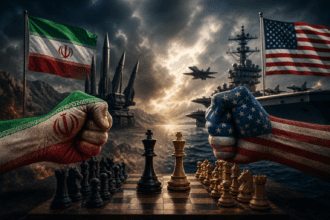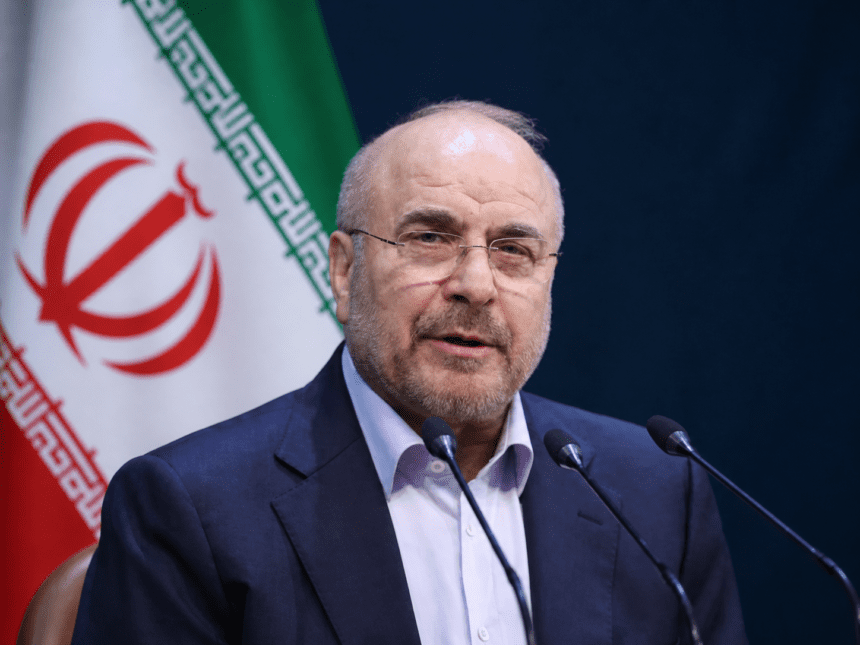
Tehran — Iran’s parliament speaker, Mohammad Bagher Ghalibaf, has delivered one of his sharpest warnings yet to the United States, saying the confrontation in and around the Strait of Hormuz is far from over and suggesting Tehran has only just started to respond. The line — rendered in English by one live report as “we have not even begun” — came as tensions around the strategic waterway rose again on Tuesday, May 5, 2026.
The remark matters because it did not land in isolation. It came against a backdrop of military signaling, disrupted shipping, fragile ceasefire diplomacy, and a growing sense that neither side fully believes the other is done escalating. Ghalibaf, who has emerged as one of Tehran’s most forceful public voices during the crisis, has in recent weeks accused Washington of relying on pressure, deadlines and naval coercion while failing to bend Iran to its will.
According to live international coverage on Tuesday, Iran described the current situation in the Strait of Hormuz as “intolerable” and warned that any further US naval push would be met with force. The same coverage said the United States had moved ahead with an operation to escort stranded vessels through the strait, a step that only deepened the standoff.
That’s the immediate news angle. But the real story is bigger than a single quote.
For weeks now, Ghalibaf has been setting out a hard line: Tehran may be talking, but it isn’t backing down. In comments reported in April, he said some parts of the negotiations had moved forward while major disagreements remained unresolved, and he made clear Iran still considered several of its demands non-negotiable.
In another round of remarks carried by regional media, Ghalibaf said the US had already failed to achieve its objectives through threats and ultimatums and had been forced to use intermediaries to pass messages to Iran. He also objected strongly to American naval activity during the ceasefire period, arguing that such moves amounted to a violation of understandings reached during talks.
That theme — diplomacy on paper, confrontation in practice — has become central to Tehran’s messaging. Iran’s position, at least as voiced by Ghalibaf and echoed in parts of state-aligned coverage, is that Washington wants freedom of movement in the Gulf without paying a political or military price for it. The US, meanwhile, has framed its actions around securing maritime traffic and preventing Iran from turning the strait into a choke point for global energy markets.
The Strait of Hormuz is no ordinary flashpoint. It is one of the world’s most sensitive shipping lanes, and even limited disruption there can send shockwaves through oil markets, insurance costs, and regional security planning. Recent reporting shows vessel traffic has slowed sharply at points during the crisis, with attacks, seizures and escort operations adding to fears that a wider economic shock could follow a military one.
Ghalibaf’s rhetoric also reflects his unusually prominent role in this phase of the crisis. Though best known formally as the speaker of parliament, he has been described in recent reporting as a key negotiator and a leading hard-line figure shaping Iran’s public posture toward Washington. That gives his words extra weight. He is not speaking from the sidelines.
Still, there is a difference between signaling and action. Iranian officials have repeatedly used muscular language in regional crises, sometimes to deter, sometimes to strengthen their hand at the negotiating table, and sometimes to reassure domestic audiences that the leadership is not yielding under pressure. Ghalibaf’s latest warning seems to do all three at once. It tells Washington that Tehran is willing to raise the cost. It tells mediators that the window for compromise is narrowing. And it tells Iranians that their leadership wants to project confidence, not caution. This is an inference drawn from the pattern of his recent statements and the timing of the latest escalation.
For now, the immediate danger is miscalculation. Reports on Tuesday pointed to warning shots, competing claims about naval encounters, and continued friction around commercial shipping. That kind of environment is messy, nervous and prone to sudden mistakes. One aggressive maneuver, one misread radar signal, one strike that goes further than intended — and the crisis could move from threats to something much harder to contain.
Whether Ghalibaf’s “we haven’t even begun yet” line proves to be a negotiating tactic or a preview of further escalation is the question hanging over the region tonight. Either way, the message from Tehran was unmistakable: Iran wants Washington to believe the current confrontation is only the opening chapter.