By using this site, you agree to the Privacy Policy and Terms of Use.
Accept
Media HydeMedia Hyde
  • Home
  • Politics
  • Education
  • Entertainment
  • Sports
  • Blogs
  • Business & Commerce
  • Others
    • Religious
    • Metropolitan
    • Climate and Weather
Font ResizerAa
Media HydeMedia Hyde
Font ResizerAa
  • Home
  • Politics
  • Education
  • Entertainment
  • Sports
  • Blogs
  • Business & Commerce
  • Others
    • Religious
    • Metropolitan
    • Climate and Weather
Follow US
© 2026 Media Hyde Network. All Rights Reserved.
Politics

‘We Haven’t Even Begun Yet’: Iran’s Mohammad Bagher Ghalibaf Issues Fresh Warning to the US

Last updated: May 5, 2026 12:26 pm
Aqil Rahman
Share
SHARE

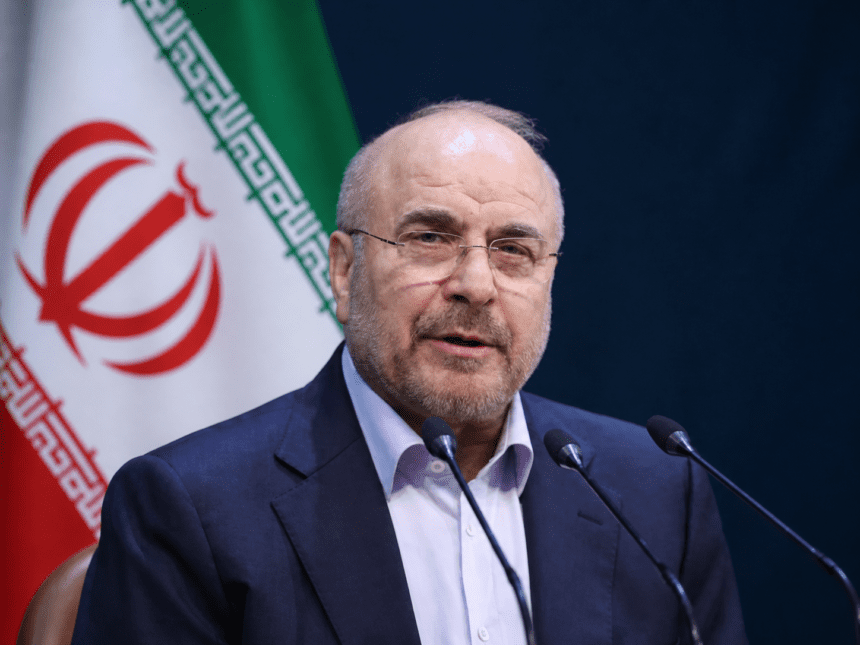
Tehran — Iran’s parliament speaker, Mohammad Bagher Ghalibaf, has delivered one of his sharpest warnings yet to the United States, saying the confrontation in and around the Strait of Hormuz is far from over and suggesting Tehran has only just started to respond. The line — rendered in English by one live report as “we have not even begun” — came as tensions around the strategic waterway rose again on Tuesday, May 5, 2026.

The remark matters because it did not land in isolation. It came against a backdrop of military signaling, disrupted shipping, fragile ceasefire diplomacy, and a growing sense that neither side fully believes the other is done escalating. Ghalibaf, who has emerged as one of Tehran’s most forceful public voices during the crisis, has in recent weeks accused Washington of relying on pressure, deadlines and naval coercion while failing to bend Iran to its will.

According to live international coverage on Tuesday, Iran described the current situation in the Strait of Hormuz as “intolerable” and warned that any further US naval push would be met with force. The same coverage said the United States had moved ahead with an operation to escort stranded vessels through the strait, a step that only deepened the standoff.

That’s the immediate news angle. But the real story is bigger than a single quote.

For weeks now, Ghalibaf has been setting out a hard line: Tehran may be talking, but it isn’t backing down. In comments reported in April, he said some parts of the negotiations had moved forward while major disagreements remained unresolved, and he made clear Iran still considered several of its demands non-negotiable.

In another round of remarks carried by regional media, Ghalibaf said the US had already failed to achieve its objectives through threats and ultimatums and had been forced to use intermediaries to pass messages to Iran. He also objected strongly to American naval activity during the ceasefire period, arguing that such moves amounted to a violation of understandings reached during talks.

That theme — diplomacy on paper, confrontation in practice — has become central to Tehran’s messaging. Iran’s position, at least as voiced by Ghalibaf and echoed in parts of state-aligned coverage, is that Washington wants freedom of movement in the Gulf without paying a political or military price for it. The US, meanwhile, has framed its actions around securing maritime traffic and preventing Iran from turning the strait into a choke point for global energy markets.

The Strait of Hormuz is no ordinary flashpoint. It is one of the world’s most sensitive shipping lanes, and even limited disruption there can send shockwaves through oil markets, insurance costs, and regional security planning. Recent reporting shows vessel traffic has slowed sharply at points during the crisis, with attacks, seizures and escort operations adding to fears that a wider economic shock could follow a military one.

Ghalibaf’s rhetoric also reflects his unusually prominent role in this phase of the crisis. Though best known formally as the speaker of parliament, he has been described in recent reporting as a key negotiator and a leading hard-line figure shaping Iran’s public posture toward Washington. That gives his words extra weight. He is not speaking from the sidelines.

Still, there is a difference between signaling and action. Iranian officials have repeatedly used muscular language in regional crises, sometimes to deter, sometimes to strengthen their hand at the negotiating table, and sometimes to reassure domestic audiences that the leadership is not yielding under pressure. Ghalibaf’s latest warning seems to do all three at once. It tells Washington that Tehran is willing to raise the cost. It tells mediators that the window for compromise is narrowing. And it tells Iranians that their leadership wants to project confidence, not caution. This is an inference drawn from the pattern of his recent statements and the timing of the latest escalation.

For now, the immediate danger is miscalculation. Reports on Tuesday pointed to warning shots, competing claims about naval encounters, and continued friction around commercial shipping. That kind of environment is messy, nervous and prone to sudden mistakes. One aggressive maneuver, one misread radar signal, one strike that goes further than intended — and the crisis could move from threats to something much harder to contain.

Whether Ghalibaf’s “we haven’t even begun yet” line proves to be a negotiating tactic or a preview of further escalation is the question hanging over the region tonight. Either way, the message from Tehran was unmistakable: Iran wants Washington to believe the current confrontation is only the opening chapter.


Share This Article
Email Copy Link Print
Previous Article Prominent Cleric Muhammad Idrees Gunned Down in KP’s Charsadda
Next Article Landing a Role at UNICEF: A Practical Guide for Professionals in Pakistan
Leave a Comment

Leave a Reply Cancel reply

Your email address will not be published. Required fields are marked *

Sponsored Ads

Stay Connected

FacebookLike
XFollow
InstagramFollow
YoutubeSubscribe
WhatsAppFollow
ThreadsFollow
Sindh Schools to Close for Two-Month Summer Break Starting June 1
Education
May 13, 2026
Pakistan Targets Tech Workforce with 20,000 AI Training Slots
Education
May 13, 2026
Tokyo University Launches Fully Autonomous Lab Where Robots Run the Show The lights are on at the University of Tokyo’s newest chemistry lab, but the lab coats are gone. In a move that signals a shift for experimental science, the university has officially opened a facility where robots handle the entire research cycle—from mixing chemicals to analyzing results—without a single human in the room. This isn’t just a room with a few automated arms. It’s a closed-loop system designed to hunt for new materials for batteries and semiconductors at speeds that make traditional methods look like they’re standing still. The AI designs the experiment, the robots execute it, and the data feeds right back into the AI to decide what happens next. "The goal is to remove the bottleneck of human physical labor," a researcher involved in the project’s pilot phase said. "A human can do maybe ten experiments a day. This system won't stop at ten, and it doesn't need to go home at 5:00 PM." The stakes are high. Japan is currently locked in a global race to find more efficient materials for the next generation of electric vehicle batteries. By cutting humans out of the "pipette-and-wait" cycle, the university expects to compress years of trial-and-error into a few weeks of non-stop robotic iteration. It’s a response to a looming crisis, too. Japan’s shrinking workforce means there are fewer young scientists entering the field every year. Automating the grunt work isn't just about speed; it’s about survival in a country where human talent is becoming a scarce resource. Critics often worry that "robot-run" means "job-lost," but the university’s lead engineers argue the opposite. They say the move frees up researchers to actually think, rather than spending eight hours a day performing repetitive liquid handling. The robots don't get bored, they don't make clerical errors, and they don't suffer from "Friday afternoon" fatigue that can ruin a data set. The lab is currently focused on thin-film materials, but the team plans to scale the technology to other branches of chemistry soon. If it works, the image of the lone scientist hunched over a workbench might soon be a relic of the past. The lab is running right now. It’ll be running tomorrow morning. And it won't need a coffee break to get through the night.
Tokyo University Launches Fully Autonomous Lab Where Robots Run the Show
Education
May 13, 2026
Pakistan Offers New Higher Education Scholarships to Bangladeshi Students
Education
May 13, 2026
Private Schools Defy Punjab Government’s Revised Summer Vacation Schedule
Education
May 13, 2026
HEC Drops Paperwork: Fully Online Degree Attestation Goes Live Nationwide
Education
May 13, 2026

You Might Also Like

Politics

UN Council Rejects China Russia Bid to Extend Iran Sanctions Relief

By
Sana Mustafa
Politics

Pakistan, UAE Agree to Expand Partnership in Economic and Development Sectors

By
Hannan Kaimkhani
Politics

Govt Won’t Bow to Pressure, CM Afridi Told to ‘Mind Provincial Duties’

By
Sana Mustafa
Politics

France to Officially Recognize Palestine: Macron’s Bold Announcement Shakes Global Diplomacy

By
Hannan Kaimkhani
Media Hyde Media Hyde Dark
Facebook Twitter Youtube Rss Medium

About US

Media Hyde Network: Your instant connection to breaking stories and live updates. Stay informed with our real-time coverage across politics, tech, entertainment, and more. Your reliable source for 24/7 News.

Top Categories
  • Headline
  • Politics
  • Entertainment
  • Education
  • Sports
  • Religious
  • Metropolitan
  • Climate and Weather
Usefull Links
  • Contact Us
  • Disclaimer
  • Privacy Policy
  • Cookies Policy
  • Advertising Policy
  • Terms & Conditions

© 2025 Media Hyde Network. All Rights Reserved.

Welcome Back!

Sign in to your account

Username or Email Address
Password

Lost your password?