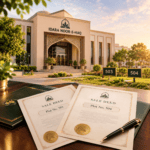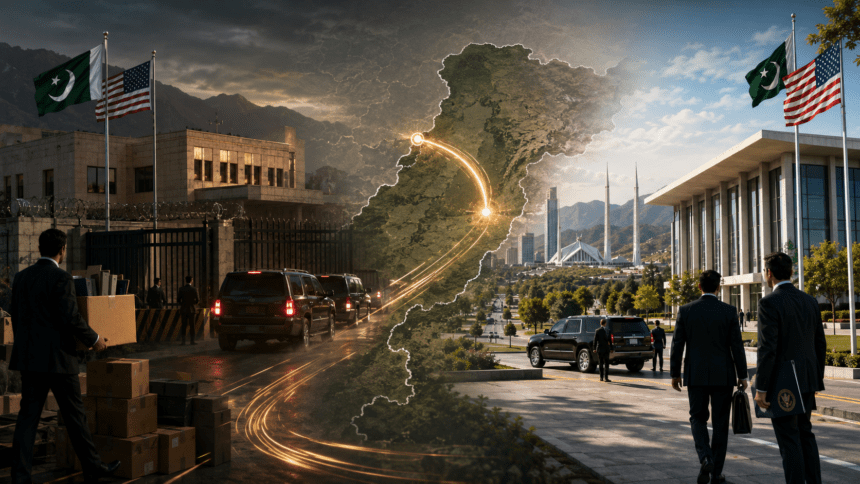
The United States has announced the phased closure of its consulate in Peshawar, saying its functions will be shifted to the US Embassy in Islamabad in a move officials have linked to personnel safety and resource management. Recent reporting says Washington has described the transition as an administrative consolidation rather than a break in diplomatic engagement with the region.
The decision affects one of America’s most strategically placed missions in Pakistan. The Peshawar post has long been seen as the US diplomatic mission closest to the Afghan border and played an important role before, during and after the 2001 US-led invasion of Afghanistan. That history gives the closure extra weight, even if the State Department is presenting it as a practical restructuring step.
According to reporting based on the State Department’s notification to Congress, the closure is expected to save about $7.5 million annually. The same reports say the consulate currently employs 18 American staff members and 89 local employees, while one-time closure costs are estimated at around $3 million, much of it tied to relocating equipment, vehicles and other assets to Islamabad and other US missions in Pakistan.
US officials have also tried to calm concerns that the move signals a broader pullback from northwestern Pakistan. Reports say services for US citizens, diplomatic oversight and broader engagement in Khyber Pakhtunkhwa will continue through the embassy in Islamabad, while the consulates in Karachi and Lahore remain operational. In other words, the footprint is changing, but Washington is arguing that the mission itself is not disappearing.
Still, the announcement carries symbolic and political significance. Peshawar has for decades occupied a unique place in US regional strategy because of its location, its security environment and its proximity to Afghan affairs. So even a gradual closure is likely to be read as a sign of how much Washington’s priorities in the region have shifted since the height of the Afghanistan war. That reading is an inference from the post’s historic role and the consolidation now underway.
For Pakistanis who relied on the mission, the practical question is simpler: where do services go now? The answer, according to current reporting, is Islamabad. That means official work once handled in Peshawar will be redirected to the capital as the closure moves forward in stages.