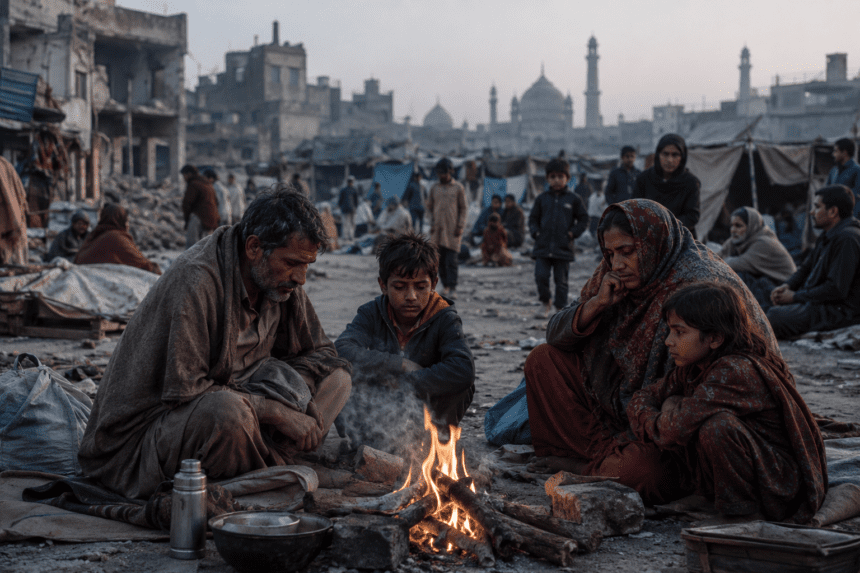
In the crowded urban neighborhoods of Lahore, many displaced families continue to battle uncertainty, poverty, and social isolation as they attempt to rebuild their lives far from their original homes.
According to reports, several internally displaced families living in Lahore’s low-income settlements say years of hardship, unstable housing, and limited economic opportunities have deepened their distrust toward authorities and aid systems. Many families described feeling abandoned despite repeated promises of support and rehabilitation.
Residents reported struggling with rising living costs, unemployment, poor access to healthcare, and lack of educational opportunities for children. Some families said they have been forced to move repeatedly between temporary shelters and rented accommodations while trying to survive in one of Pakistan’s largest and most expensive cities.
Women and children are reportedly among the most affected, with many households facing food insecurity and emotional stress linked to long-term displacement. Social workers say prolonged instability often creates psychological trauma and weakens trust in institutions that displaced communities believe failed to protect or support them adequately.
Community activists argue that displaced populations living in urban centers like Lahore frequently remain invisible within broader development planning. Experts warn that without sustainable rehabilitation programs, many families may continue facing cycles of poverty, insecurity, and marginalization.
Researchers studying displacement trends in Pakistan say urban migration caused by conflict, climate pressures, economic instability, and regional insecurity has increased pressure on major cities. Lahore, Karachi, and other urban centers have witnessed growing populations of vulnerable families searching for work, safety, and stability.
Despite the hardships, many displaced families say they remain determined to survive and secure better futures for their children. However, trust in official systems remains low, with several residents insisting that meaningful support must go beyond temporary relief measures and address long-term housing, employment, education, and healthcare needs.
The situation highlights broader humanitarian and social challenges surrounding internal displacement in Pakistan, where thousands of families continue searching for stability while navigating difficult urban realities.