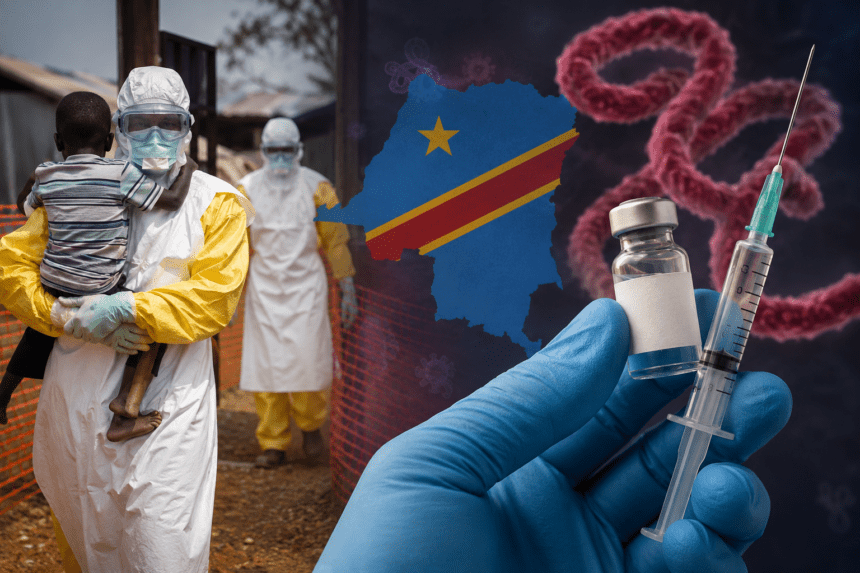
The World Health Organization has warned that a vaccine for the latest Ebola outbreak affecting the Democratic Republic of Congo and Uganda could take six to nine months to become available, raising concern over the spread of the rare Bundibugyo strain of the virus.
According to WHO, the outbreak involves Bundibugyo virus disease, a rare form of Ebola for which there is currently no approved vaccine or treatment. Reuters reported that the outbreak has caused about 600 suspected cases and 139 suspected deaths, while 51 cases have been confirmed in Congo and two in Uganda.
Health officials believe the virus may have been circulating undetected in eastern Congo for around two months before being identified. WHO officials said delays in diagnosis, limited testing, and the early similarity of Ebola symptoms to illnesses such as malaria and typhoid have made containment more difficult.
The outbreak is mainly affecting Congo’s eastern Ituri province, with concerns also reported in North Kivu. The area is already facing insecurity, displacement, and pressure on the healthcare system, making disease surveillance and emergency response more challenging. WHO has also reported confirmed cases in Uganda linked to travel from Congo.
WHO has declared the outbreak a public health emergency of international concern, saying there is a significant risk of wider regional spread. The agency said the real scale of the outbreak may be larger than currently detected because of rising suspected cases and clusters of unexplained deaths.
Experts are now studying possible vaccine options. WHO officials said the most promising vaccine candidate uses a platform similar to existing Ebola vaccines, but it may still take several months before it can be deployed. Another possible candidate based on the Oxford-AstraZeneca COVID-19 vaccine platform could reach trials sooner, but it still lacks key animal-efficacy data.
Health workers on the ground have expressed concern over limited protective equipment, weak isolation facilities, and growing pressure on hospitals. Public health teams are working to trace contacts, identify transmission chains, isolate suspected cases, and strengthen infection prevention measures.
The outbreak has triggered alarm because Ebola can spread through direct contact with infected bodily fluids and can be deadly without quick detection and care. Health agencies are urging communities to report symptoms early, avoid unsafe burial practices, and cooperate with medical teams to slow transmission.