ISLAMABAD: India’s fast-expanding strategic partnership with the United Arab Emirates is drawing quiet concern in Pakistan, where officials and analysts see New Delhi’s growing defence, energy and maritime footprint in the Gulf as a potential squeeze on Islamabad’s traditional geopolitical and economic space.
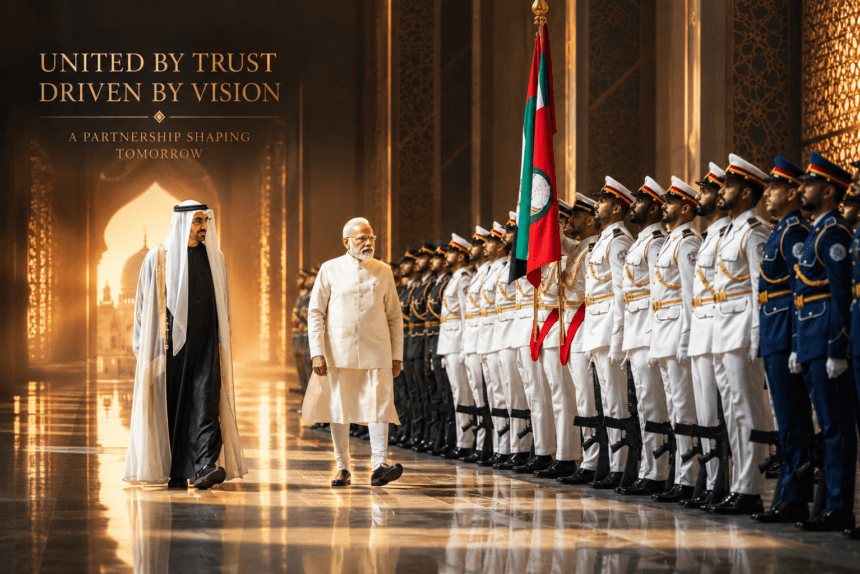
The concern has sharpened after India and the UAE moved to deepen cooperation across defence production, military training, energy storage and maritime security. During Prime Minister Narendra Modi’s latest visit to the UAE, both sides advanced a framework for strategic defence cooperation while Abu Dhabi’s ADNOC signed agreements with Indian energy partners, including a plan to explore expanding crude oil storage in India to as much as 30 million barrels.
For Pakistan, this is not just another bilateral partnership in the region. The Gulf has long been central to Islamabad’s foreign policy, economic survival and security thinking. Millions of Pakistani workers live across Gulf states, remittances from Saudi Arabia and the UAE remain a lifeline for Pakistan’s foreign exchange reserves, and Gulf capitals have often provided deposits, deferred oil payments and diplomatic support during periods of crisis.
That is why India’s widening presence in the UAE is being watched carefully in Islamabad.
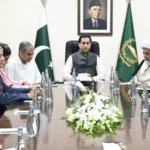
A senior Pakistani diplomatic source, speaking on background, said the issue is “not only about India getting closer to one Gulf country,” but about “a wider shift in how Gulf states are balancing their economic and security partnerships.” The official added that Pakistan would need “more active, less sentimental diplomacy” to protect its position.
The latest India-UAE engagement has several layers. On the defence side, the two countries have been institutionalising military contacts through the Joint Defence Cooperation Committee. India’s defence ministry said the 13th JDCC meeting in July 2025 focused on deepening bilateral defence ties, with the UAE delegation also taking part in the India-UAE Defence Industry Partnership Forum.
Military exercises are also becoming more regular. India and the UAE held the first edition of the bilateral army exercise Desert Cyclone in India in January 2024, while the second edition was held in the UAE in December 2025. India’s official defence note said the exercise aimed to improve interoperability and strengthen cooperation between the Indian Army and UAE Land Forces.
Energy is another big piece of the puzzle. ADNOC’s new agreements with Indian partners cover crude oil, LNG and LPG storage, strategic reserves and supply opportunities. The company said the potential expansion of its crude storage in India could include existing facilities at Mangalore and new opportunities at Visakhapatnam and Chandikhol.
This matters because energy security has always been one of Pakistan’s strongest links with Gulf capitals. But India, with its huge market, refining capacity and long-term demand for hydrocarbons, is offering Gulf producers something Pakistan cannot easily match: scale.
Frankly, that is where Islamabad’s discomfort begins.
Pakistan’s relationship with the UAE is older, warmer and socially deeper in many ways. Pakistani workers helped build parts of the Gulf economy, and the UAE has remained one of Pakistan’s top remittance sources. The State Bank of Pakistan has also underlined the importance of Gulf remittances, noting in a recent working paper that Pakistani workers in GCC countries are significantly more likely to send higher remittances compared with other destinations.
But strategic influence is no longer built on history alone. Gulf states are diversifying their partnerships, seeking technology, defence manufacturing, food security, logistics, artificial intelligence and investment corridors. India has positioned itself aggressively in that space, helped by its large consumer market, growing defence industry and expanding maritime role in the Arabian Sea and the Indian Ocean.
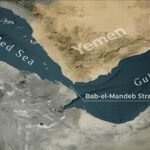
For Pakistan, the maritime dimension is especially sensitive. The UAE sits near critical sea lanes linking the Gulf, Arabian Sea and wider Indian Ocean. Closer India-UAE maritime coordination could give New Delhi more diplomatic and operational comfort in a region Pakistan considers vital to its own security.
Islamabad is not without leverage. Pakistan still has deep military-to-military ties across the Gulf, a large expatriate workforce, religious and cultural proximity, and a long record of security cooperation. Gulf capitals also understand that Pakistan remains an important Muslim-majority nuclear state located at the junction of South Asia, Central Asia, Iran and the Arabian Sea.
Still, the old equation is changing.
India’s outreach to the UAE comes at a time when New Delhi is also expanding strategic partnerships with several other countries in defence, technology and maritime security. That broader diplomatic momentum gives India more room to present itself as a net security and economic partner, not merely a buyer of Gulf oil.
Pakistani analysts argue that Islamabad’s response should not be to pressure Gulf states or frame their India ties as a betrayal. That approach, they say, would likely backfire. Instead, Pakistan needs to rebuild its Gulf strategy around economics: investment-ready projects, skilled labour exports, logistics, mining, agriculture, ports and technology cooperation.
There is also a domestic angle. Pakistan’s recurring balance-of-payments crises have weakened its diplomatic bargaining power. When a country repeatedly seeks emergency deposits and rollover support, its foreign policy space narrows. India, by contrast, enters Gulf conversations with trade, market access and investment opportunities on the table.
That contrast is uncomfortable, but it is real.
The UAE, for its part, appears to be following a pragmatic policy. It is not abandoning Pakistan. Nor is it choosing India in a zero-sum way. Abu Dhabi is simply deepening ties with a larger economy that fits its long-term diversification goals. For Pakistan, the challenge is to ensure that its own relationship with the UAE does not become trapped in nostalgia, labour exports and crisis financing.
The message from recent developments is pretty clear: the Gulf is no longer anyone’s guaranteed backyard.
Pakistan still has goodwill in the region, but goodwill needs updating. India’s strategic rise in the UAE is a reminder that influence now follows investment, connectivity, defence industry links and credible economic planning. Islamabad can still compete, but only if it moves faster — and with a lot more seriousness than it has shown in recent years.