By using this site, you agree to the Privacy Policy and Terms of Use.
Accept
Media HydeMedia Hyde
  • Home
  • Politics
  • Education
  • Entertainment
  • Sports
  • Blogs
  • Business & Commerce
  • Others
    • Religious
    • Metropolitan
    • Climate and Weather
Font ResizerAa
Media HydeMedia Hyde
Font ResizerAa
  • Home
  • Politics
  • Education
  • Entertainment
  • Sports
  • Blogs
  • Business & Commerce
  • Others
    • Religious
    • Metropolitan
    • Climate and Weather
Follow US
© 2026 Media Hyde Network. All Rights Reserved.
international

Ben-Gvir Condemned After Taunting Handcuffed Gaza Flotilla Activists

Last updated: May 21, 2026 1:33 am
Yamna Shahid
Share
Ben-Gvir Condemned After Taunting Handcuffed Gaza Flotilla Activists
SHARE

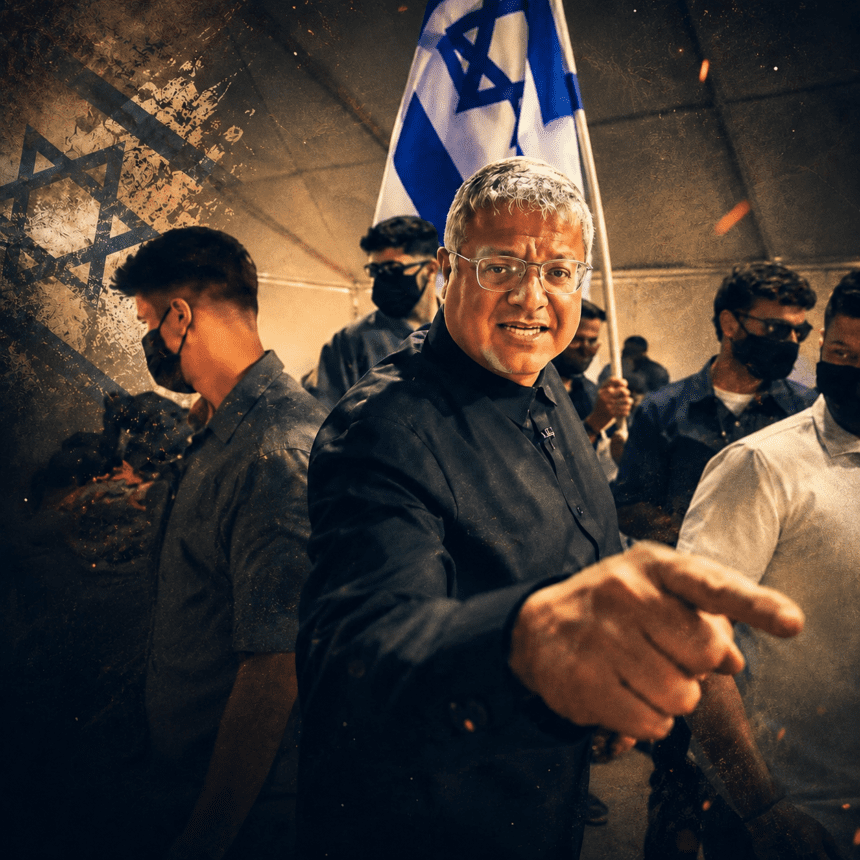
Jerusalem — Israel’s far-right National Security Minister Itamar Ben-Gvir has drawn sharp criticism at home and abroad after posting video footage of detained Gaza flotilla activists forced to kneel with their hands tied behind their backs, a scene that quickly turned into a diplomatic storm for Prime Minister Benjamin Netanyahu’s government.

The activists were part of a Gaza-bound aid flotilla intercepted by Israeli forces in international waters on Tuesday before being taken to an Israeli port. Reuters reported that Israeli police made the detainees kneel in rows while Ben-Gvir looked on, a moment that was filmed and circulated online by the minister himself. The footage showed the activists restrained and placed in degrading positions, prompting condemnation from several foreign governments and even senior Israeli officials.

Ben-Gvir, who has long built his political brand on hardline security rhetoric, appeared to use the detention scene as a warning to others trying to challenge Israel’s blockade of Gaza. But the move backfired almost immediately. Netanyahu publicly rebuked him, saying the conduct shown in the video was “not in line with Israel’s values and norms,” while still defending Israel’s right to stop flotillas heading toward Gaza. Foreign Minister Gideon Saar also criticized the episode, warning that it damaged Israel’s image internationally.

The reaction outside Israel was blunt. The European Commission called the treatment of the activists “completely unacceptable” and said detainees must be handled with dignity and in line with international law. Canada’s Prime Minister Mark Carney went even further, describing Israel’s treatment of the flotilla members as “abominable” and “unacceptable,” while Ottawa summoned Israel’s ambassador in protest.

Several European governments also demanded explanations. Italy, France, the Netherlands and others summoned Israeli envoys, while Germany’s ambassador to Israel called the treatment “wholly unacceptable.” British Foreign Minister Yvette Cooper said she was “truly appalled” by the footage and said London had asked Israeli authorities for an explanation.

The flotilla, identified by organizers as the Global Sumud Flotilla, was attempting to challenge Israel’s naval blockade and draw attention to Gaza’s worsening humanitarian crisis. Israel has maintained the blockade since Hamas took control of Gaza in 2007, saying it is necessary to stop weapons from reaching the group. Activists and rights organizations argue the restrictions amount to collective punishment and have deepened the suffering of civilians trapped in the enclave.

Rights group Adalah accused Israeli authorities of mistreating detainees, including reports of injuries and humiliating handling. Israel has denied some of the more serious allegations, including claims that live ammunition was used during interdictions. Still, the images of bound activists kneeling on the ground have given critics a powerful visual argument — and, frankly, one Israel’s own allies seemed unwilling to defend.

The United States also saw criticism from an unexpected corner. Mike Huckabee, the U.S. ambassador to Israel and a staunch supporter of the country, called the flotilla a “stupid stunt” but said Ben-Gvir’s actions were “despicable” and had “betrayed the dignity” of Israel. That kind of comment, coming from such a pro-Israel figure, underlined just how far the backlash had spread.

For Netanyahu, the incident adds another headache at a time when Israel is already facing intense pressure over Gaza, aid access, detainee treatment and civilian suffering. His criticism of Ben-Gvir may calm some diplomatic anger, but it also exposes the uneasy balance inside his coalition, where far-right ministers often push positions that create problems far beyond Israel’s domestic politics.

The detained activists are expected to face deportation proceedings, according to Israeli officials and media reports. But the damage from the video may linger longer than the detentions themselves. What began as a show of force by Ben-Gvir has turned into another global flashpoint over Israel’s conduct in Gaza — and over how far its most hardline ministers are willing to go in front of the cameras.




Share This Article
Email Copy Link Print
Previous Article Varun Dhawan Apologises After Fan Waits Five Hours at Lucknow Event Varun Dhawan Apologises After Fan Waits Five Hours at Lucknow Event
Next Article Efforts to Contain Ebola May Have Been Hindered by Lack of U.S. Involvement Efforts to Contain Ebola May Have Been Hindered by Lack of U.S. Involvement
Leave a Comment

Leave a Reply Cancel reply

Your email address will not be published. Required fields are marked *

Sponsored Ads

Stay Connected

FacebookLike
XFollow
InstagramFollow
YoutubeSubscribe
WhatsAppFollow
ThreadsFollow
Govt, opposition report progress in talks ahead of Islamabad march
Breaking pakistan Politics
October 3, 2026
Gold, silver prices decline in Pakistan amid global downturn
Gold prices drop sharply in Pakistan as bullion market weakens
Business & Commerce Headline
October 3, 2026
OpenAI expands ChatGPT shopping with virtual try-on and Favorites
Headline Technology
October 3, 2026
Saudi Arabia plans offensive to retake Bab el-Mandeb from Houthis
Saudi Arabia mulls major military offensive in Yemen
Breaking World
October 3, 2026
Federal Government Hikes Petrol and Diesel Prices Again
Business & Commerce Headline
October 2, 2026
New Phase of Multipurpose Cargo Handling Begins at Karachi Port
Business & Commerce
October 2, 2026

You Might Also Like

PARIS — French President Emmanuel Macron said Tuesday that France will help Lebanon prepare for negotiations with Israel, throwing Paris more directly behind a diplomatic push that both sides hope can keep a shaky ceasefire from collapsing. The pledge came after Macron met Lebanese Prime Minister Nawaf Salam in Paris on April 21, 2026, with both men calling for talks aimed at reinforcing the truce and easing pressure along the border. The message from Paris was fairly blunt: diplomacy has to move faster than events on the ground. Macron said securing the truce in Lebanon remains a priority, while Salam said Beirut is still committed to a political route — but only if Israel fully withdraws and Lebanese sovereignty is respected. That gives the talks a familiar tension from the outset: everybody says they want calm, but each side is attaching hard conditions to what comes next. What makes this moment different is that actual contact has already started. Earlier in April, Lebanon and Israel held their first direct diplomatic talks in decades in Washington, a notable step for two countries that remain formally at war. Those talks lasted more than two hours, according to AP, and were seen as an opening rather than any kind of breakthrough. Still, even getting both sides into the same room was a shift. A month ago, that would have sounded like a long shot. France is trying to carve out a role around that opening, even if it is not at the center of the U.S.-led channel. Reuters, in a report carried by AOL, said Macron offered French help in preparing Lebanese authorities for the negotiations despite Paris not being directly involved in the current track. That matters because France has longstanding ties to Lebanon and has already tried in recent months to position itself as a possible facilitator for Lebanon-Israel contacts. None of this is happening in calm conditions. The ceasefire itself is fragile, and that word keeps showing up for a reason. AP reported that Macron and Salam framed negotiations as a way to shore up that truce, not celebrate it. In other words, this is less about a peace moment and more about damage control — an attempt to stop cross-border violence from flaring back into a wider war. There is another layer here too: France’s own stake in Lebanon’s security picture has grown more personal and more political. AP reported that a French peacekeeper serving with the U.N. mission in southern Lebanon was recently killed, with France and UNIFIL blaming Hezbollah, which denied responsibility. Macron also signaled France could support a future peacekeeping arrangement if the current UNIFIL mandate expires later this year. That does not make France a neutral bystander. It makes Paris a country with skin in the game. For Lebanon, Salam’s visit was about more than symbolism. It was also about trying to strengthen Beirut’s hand before any deeper round of talks. That is how the Reuters report framed the meeting, and it fits the broader reality: Lebanon wants diplomatic backing, but it also wants guarantees that negotiations will not simply formalize Israeli military leverage on the ground. Israel, for its part, has shown little appetite for giving France a central seat. Recent reporting from The Times of Israel said Jerusalem has effectively boxed Paris out of the current Lebanon track, a sign that Macron’s activism is not automatically welcome everywhere. So France may end up playing the role of outside backer rather than direct broker, at least for now. That is still useful, but it is not the same thing as controlling the process. That leaves the region in an awkward, in-between place. The channels are open. The rhetoric is cautious. The fighting has eased, but nobody seems ready to pretend the danger is over. Macron’s offer to help Lebanon prepare for talks is significant because it tries to turn a brief diplomatic opening into something sturdier. Whether that works depends on what happens next — in Washington, along the border, and in the political calculations of Beirut and Jerusalem. Right now, the talks look less like a grand peace effort and more like a narrow bridge built over very thin ice.
international

Macron says France will help Lebanon get ready for talks with Israel

By
Mabruka Khan
Headlineinternational

Rubio Warns Iran’s Strait of Hormuz Toll Plan Could End Diplomatic Deal Hopes

By
Haris Ali
Tehran Braces for Unrest as Funeral Rites Begin for Supreme Leader
Headlineinternational

Tehran Braces for Unrest as Funeral Rites Begin for Supreme Leader

By
Haris Ali
Headlineinternational

Small Plane Hits Beijing Landmark: Emergency Services Scramble to CBD

By
Haris Ali
Media Hyde Media Hyde Dark
Facebook Twitter Youtube Rss Medium

About US

Media Hyde Network: Your instant connection to breaking stories and live updates. Stay informed with our real-time coverage across politics, tech, entertainment, and more. Your reliable source for 24/7 News.

Top Categories
  • Headline
  • Politics
  • Entertainment
  • Education
  • Sports
  • Religious
  • Metropolitan
  • Climate and Weather
Usefull Links
  • Contact Us
  • Disclaimer
  • Privacy Policy
  • Cookies Policy
  • Advertising Policy
  • Terms & Conditions

© 2025 Media Hyde Network. All Rights Reserved.

Welcome Back!

Sign in to your account

Username or Email Address
Password

Lost your password?