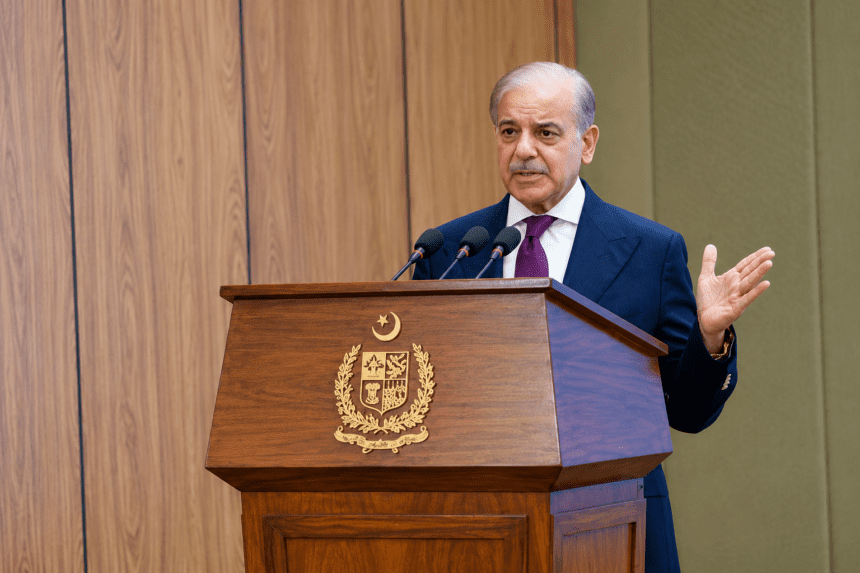
Islamabad: Prime Minister Shehbaz Sharif has invited greater Qatari investment in Pakistan after meeting a delegation from Qatar-based Taameer Group, saying the country offers strong opportunities in tourism, hospitality, real estate, and construction. The delegation was led by the group’s founder, Muhammed Hassain Al Ali, and the prime minister directed relevant authorities to provide full facilitation for the company’s planned expansion.
According to official reporting, the meeting focused on Taameer Group’s ongoing and future investment plans in Pakistan. Shehbaz described Qatar as a long-standing friend that has supported Pakistan in difficult periods and said Islamabad wants to turn that political goodwill into deeper commercial engagement.
The immediate significance of the meeting lies in the sectors under discussion. Tourism and hospitality have been repeatedly highlighted by the government as underdeveloped areas with room for foreign capital, while real estate and construction remain attractive because they can generate jobs quickly and create visible economic activity. Pakistan Today’s report added that the government linked this outreach to broader reforms under the Special Investment Facilitation Council (SIFC) framework, which has been promoted as a mechanism for speeding up investor decisions and reducing bureaucratic friction.
This outreach also fits neatly into the government’s wider economic message. In a separate review meeting on investment promotion last month, Shehbaz said attracting investment is the government’s top priority for achieving growth, and he directed officials to simplify regulatory compliance, improve coordination with investors, and make licensing and related services easier to access.
That broader context matters, because Pakistan has been trying to show foreign investors that it is not only open for business, but willing to actively remove obstacles that have long discouraged outside capital. Seen that way, the Taameer Group meeting was not just a courtesy call. It looked more like part of a sustained campaign to convert diplomatic relationships, especially in the Gulf, into concrete investment projects. This is an inference based on the government’s repeated public emphasis on facilitation and reform.
For now, the clearest confirmed takeaway is straightforward: the prime minister has publicly backed Taameer Group’s expansion plans and asked state institutions to support them. The next question is whether that political support translates into announced projects, timelines, and actual capital deployment on the ground.